Applying for a personal loan can be a smart way to finance major expenses, consolidate debt, or handle unexpected emergencies. However, approval isn’t automatic. Every lender evaluates applicants based on specific criteria to determine whether they can comfortably repay the loan.
Understanding personal loan requirements before applying can improve your approval chances and help you secure better interest rates and loan terms. While each lender has its own policies, most consider similar factors such as credit history, income, employment, debt obligations, and identity verification.
This guide explains the most common personal loan requirements in 2026, the documents you’ll typically need, and practical strategies to strengthen your application.
What Is a Personal Loan?
A personal loan is a fixed amount of money borrowed from a bank, credit union, or online lender that is repaid over a set period through monthly installments. Unlike mortgages or auto loans, personal loans are often unsecured, meaning they generally don’t require collateral.
People commonly use personal loans for:
- Debt consolidation
- Home improvements
- Medical expenses
- Wedding costs
- Vacation expenses
- Emergency repairs
- Major purchases
Because these loans are flexible, lenders carefully assess applicants before approving them.
Why Lenders Have Personal Loan Requirements
Lenders evaluate borrowers to reduce lending risk. The goal is to determine whether an applicant has the financial ability and willingness to repay the loan according to the agreed terms.
Meeting the basic eligibility requirements doesn’t always guarantee approval, but it significantly improves your chances.
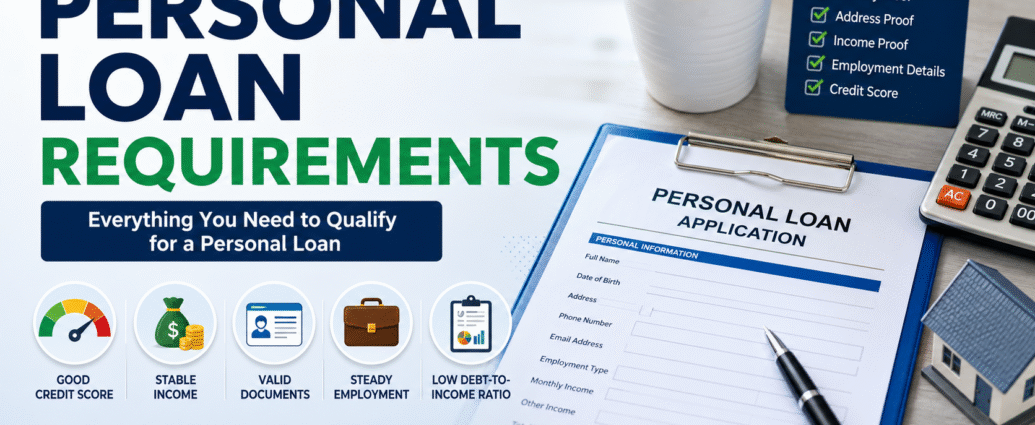
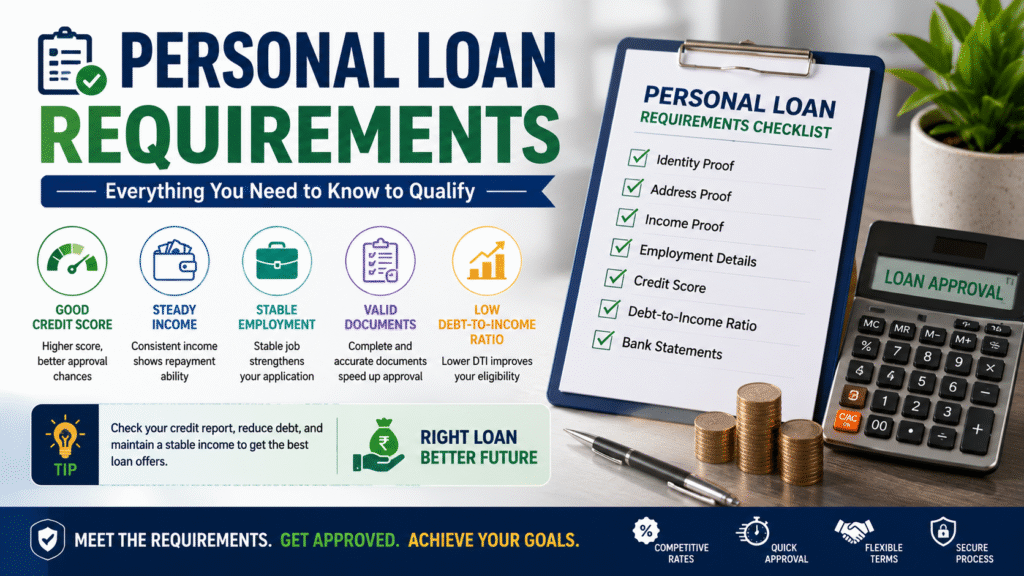
Common Personal Loan Requirements
Although exact criteria vary between lenders, these are the most common requirements you’ll encounter.
1. Credit Score
Your credit score is one of the first factors lenders review.
A higher credit score often provides:
- Better approval odds
- Lower interest rates
- Higher borrowing limits
- More flexible repayment terms
Applicants with limited or fair credit may still qualify, but they might receive higher interest rates or smaller loan amounts.
2. Stable Income
Lenders want confidence that you can make monthly payments.
Income may come from:
- Full-time employment
- Part-time work
- Self-employment
- Retirement income
- Pension benefits
- Rental property income
Rather than focusing only on the amount you earn, lenders typically evaluate whether your income is stable and sufficient to support additional debt.
3. Employment Status
Employment helps demonstrate financial stability.
Many lenders accept applicants who are:
- Full-time employees
- Part-time employees
- Self-employed
- Freelancers
- Retirees with qualifying income
Consistent employment history generally strengthens an application.
4. Debt-to-Income (DTI) Ratio
Your debt-to-income ratio compares your monthly debt payments with your gross monthly income.
A lower DTI indicates that you have more income available to handle new loan payments.
Managing existing debt before applying may improve your borrowing profile.
5. Age Requirement
Applicants typically must meet the legal minimum age required in their country or state.
They must also have the legal capacity to enter into a loan agreement.
6. Identity Verification
Every lender verifies the applicant’s identity to comply with financial regulations and reduce fraud.
Typical identification documents include:
- Passport
- Driver’s license
- National identity card
- Government-issued photo ID
7. Residential Address
Applicants usually need to provide proof of their current address.
Acceptable documents often include:
- Utility bills
- Bank statements
- Lease agreements
- Government correspondence
Current address verification helps lenders confirm residency.
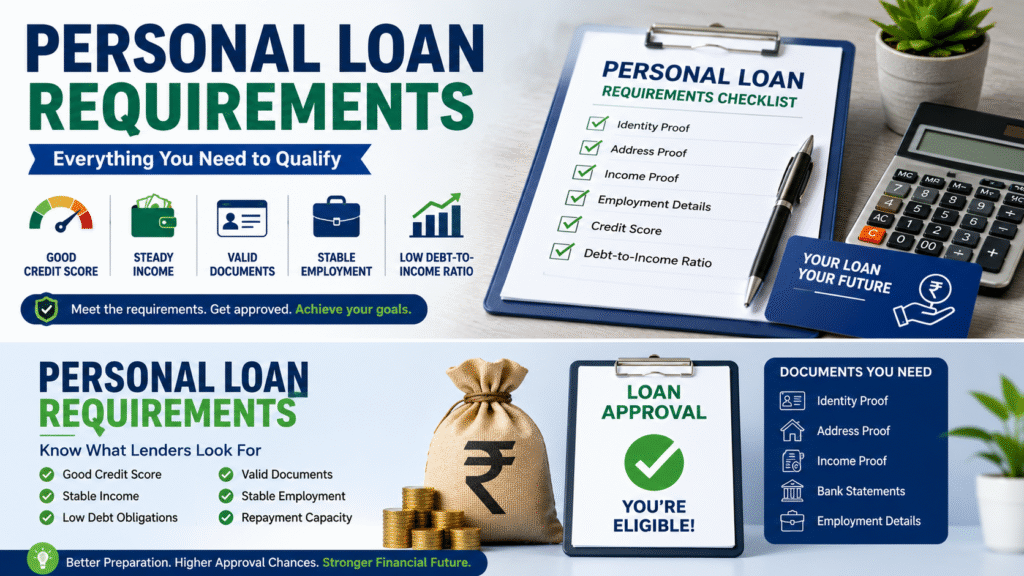
Documents Required for a Personal Loan
Having your documents ready can speed up the approval process.
Commonly requested documents include:
Identity Proof
- Passport
- Driver’s license
- National ID
Address Proof
- Utility bill
- Rental agreement
- Bank statement
Income Proof
- Recent pay stubs
- Tax returns
- Bank statements
- Employment letter
Employment Details
- Employer information
- Job title
- Employment duration
Some lenders may request additional documentation depending on your financial profile.
Factors That Can Improve Loan Approval
Meeting the minimum requirements is only the first step.
These practices may improve your approval chances.
Maintain Good Credit
Pay bills on time and avoid missed payments.
Positive payment history remains one of the strongest indicators of responsible borrowing.
Reduce Existing Debt
Lowering outstanding balances before applying may improve your debt-to-income ratio.
A healthier DTI often makes borrowers more attractive to lenders.
Your Information
Ensure your application contains accurate information.
Simple mistakes involving income, employment dates, or addresses can delay approval.
Apply for the Right Loan Amount
Borrow only what you genuinely need.
Requesting a loan that aligns with your financial profile may improve your chances of approval.
Common Reasons Personal Loan Applications Are Rejected
Understanding common rejection reasons helps applicants prepare stronger applications.
Low Credit Score
Poor credit history may indicate higher lending risk.
Insufficient Income
If income appears inadequate to support new loan payments, approval may be less likely.
High Existing Debt
Large monthly financial obligations can reduce borrowing capacity.
Incomplete Documentation
Missing documents frequently delay or prevent loan approval.
Unstable Employment
Frequent job changes or inconsistent income may affect lender confidence.
Secured vs Unsecured Personal Loans
| Feature | Secured Personal Loan | Unsecured Personal Loan |
|---|---|---|
| Collateral Required | Yes | No |
| Approval Requirements | Often Easier | Usually More Strict |
| Interest Rate | Often Lower | May Be Higher |
| Risk to Borrower | Collateral at Risk | No Collateral Required |
| Best For | Larger loans | General personal expenses |
Choosing between the two depends on your financial circumstances and willingness to provide collateral.
How to Increase Your Chances of Approval
Several practical strategies can strengthen your application.
- Check your credit report before applying.
- Correct any errors in your credit file.
- Avoid submitting multiple loan applications within a short period.
- Pay down existing debt where possible.
- Maintain stable employment.
- Keep your financial documents organized.
- Compare lenders before applying.
Preparation often leads to smoother approvals and better loan offers.
Expert Tips Before Applying for a Personal Loan
After reviewing lending practices across banks and online lenders, one trend is clear: preparation matters as much as your financial profile.
Many applicants focus solely on interest rates, but approval decisions also consider your repayment history, debt obligations, and application accuracy. Before applying, review your budget to ensure you can comfortably manage the monthly payments throughout the loan term.
It’s also wise to compare multiple lenders rather than accepting the first offer you receive. Even small differences in interest rates or fees can significantly affect the total cost of borrowing over several years.
Is a Personal Loan Right for You?
A personal loan can be a valuable financial tool when used responsibly. It may help consolidate high-interest debt, cover emergency expenses, or finance planned purchases.
However, borrowing should always fit within your budget. Carefully compare lenders, understand all fees and repayment terms, and avoid borrowing more than necessary. Responsible borrowing not only helps you meet your financial goals but also supports a healthier credit profile over time.
Learn More About Personal Loans
If you’d like to explore personal loans in more detail, these trusted resources provide reliable and up-to-date information:
- Consumer Financial Protection Bureau (CFPB): https://www.consumerfinance.gov/consumer-tools/loans/
- Wikipedia – Personal Loan: https://en.wikipedia.org/wiki/Personal_loan
These resources explain loan terminology, borrower rights, and key considerations before taking out a personal loan.
Frequently Asked Questions (FAQ)
What are the basic personal loan requirements?
Short answer: Most lenders require proof of identity, stable income, employment details, and an acceptable credit profile.
Requirements vary depending on the lender and loan type.
What credit score is needed for a personal loan?
Short answer: There is no universal minimum.
Higher credit scores generally improve approval chances and may qualify borrowers for lower interest rates.
Can I get a personal loan without collateral?
Short answer: Yes.
Many personal loans are unsecured and do not require collateral, although approval standards may be stricter.
What documents are required for a personal loan?
Short answer: Typically, identification, proof of address, proof of income, and employment information.
Some lenders may request additional documents based on your financial situation.
Does income affect loan approval?
Short answer: Yes.
Lenders evaluate whether your income is sufficient to repay the loan alongside your other financial obligations.
Can self-employed individuals qualify for a personal loan?
Short answer: Yes.
Self-employed applicants may need to provide additional income documentation, such as tax returns or bank statements.
How long does personal loan approval take?
Short answer: It depends on the lender.
Some online lenders provide decisions within a day, while traditional banks may take several business days.
Should I apply with multiple lenders at the same time?
Short answer: Usually not.
Submitting many applications in a short period may affect your credit profile and reduce approval chances with some lenders.