Opening a bank account is one of the first and most important financial steps for anyone living, working, or studying in the United States. Whether you’re a U.S. citizen, permanent resident, international student, or newcomer, having a bank account makes it easier to receive payments, pay bills, save money, and manage your finances securely.
Fortunately, opening a bank account in the U.S. is usually a straightforward process if you understand the requirements and choose the right financial institution. However, with hundreds of banks, credit unions, and online banking platforms available, deciding where to open an account can feel overwhelming.
In this guide, you’ll learn how to open a bank account in the US, what documents you’ll need, the different account types available, common fees to watch for, and practical tips to help you select the best bank for your financial needs.
Why You Need a Bank Account in the US
While it’s possible to manage money without a bank account, doing so can be inconvenient and expensive. A bank account provides a secure place to store your money while giving you access to modern financial services.
Benefits include:
- Safe storage for your money
- Direct deposit for salary or government benefits
- Easy online bill payments
- Debit card for purchases
- Mobile banking access
- ATM withdrawals
- Money transfers
- Savings opportunities
- Better financial recordkeeping
Having a bank account also makes it easier to establish a financial history, which may be helpful when applying for loans, credit cards, or renting an apartment.
Types of Bank Accounts
Before opening an account, it’s important to understand the most common options available.
Checking Account
A checking account is designed for everyday banking.
Typical features include:
- Debit card
- Unlimited deposits
- Online bill payments
- Mobile banking
- ATM access
- Direct deposit
Checking accounts are ideal for managing regular income and daily expenses.
Savings Account
A savings account helps you save money while earning interest.
It’s commonly used for:
- Emergency funds
- Vacation savings
- Home down payments
- Education expenses
Savings accounts generally offer higher interest rates than checking accounts but may have different withdrawal rules depending on the bank.
Money Market Account
Money market accounts combine features of checking and savings accounts.
They may offer:
- Competitive interest rates
- Limited check-writing
- Debit card access
These accounts are often suitable for individuals maintaining larger balances.
Certificate of Deposit (CD)
A CD allows you to deposit money for a fixed period in exchange for a guaranteed interest rate.
Because your money remains invested until the maturity date, CDs are generally better suited for long-term savings goals.
Who Can Open a Bank Account in the US?
Most banks allow the following individuals to open accounts:
- U.S. citizens
- Permanent residents
- International students
- Temporary workers
- Foreign nationals (at participating banks)
- Business owners
Eligibility requirements vary by institution, so it’s always wise to confirm with your chosen bank.
Documents Required to Open a Bank Account
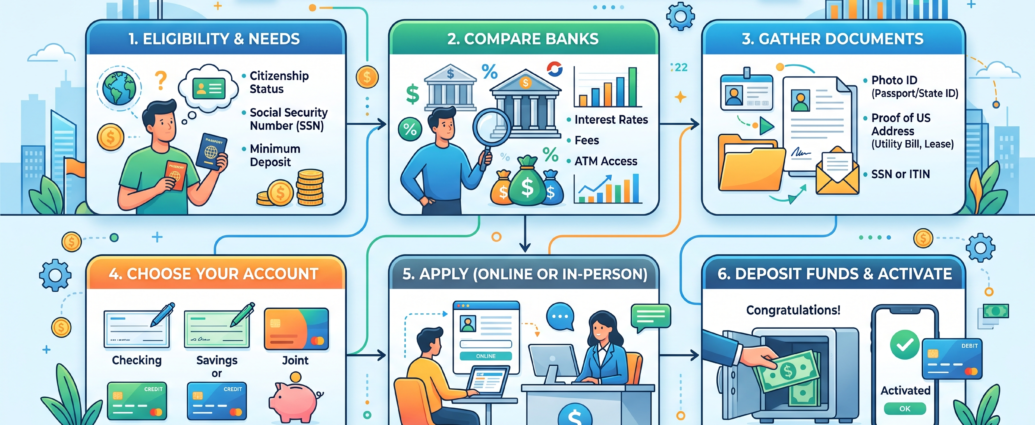
Most banks require identity verification and proof of address.
Commonly accepted documents include:
Government-Issued Identification
Examples include:
- Passport
- Driver’s license
- State ID
- Permanent Resident Card
Social Security Number (SSN)
Many banks request your Social Security Number.
If you don’t have one, some banks may accept an Individual Taxpayer Identification Number (ITIN) or alternative documentation.
Proof of Address
Banks commonly accept:
- Utility bills
- Lease agreements
- Bank statements
- Government correspondence
Initial Deposit
Some banks require an opening deposit, while others allow accounts to be opened with no minimum balance.
Always check the bank’s requirements before applying.
Step-by-Step: How to Open a Bank Account in the US
Opening a bank account usually takes only a short time if you have the required documents.
Step 1: Compare Banks
Research several banks before making a decision.
Compare:
- Monthly fees
- ATM access
- Mobile banking
- Interest rates
- Customer service
- Branch locations
Don’t choose a bank based only on promotional offers.
Step 2: Choose the Right Account
Select an account that matches your financial habits.
For example:
- Everyday spending → Checking account
- Long-term savings → Savings account
- Growing savings with flexibility → Money market account
Step 3: Gather Your Documents
Prepare all required identification before visiting the bank or applying online.
Having everything ready helps prevent delays.
Step 4: Complete the Application
Most banks allow applications:
- Online
- In person
- Through mobile apps
Complete all sections accurately to avoid processing delays.
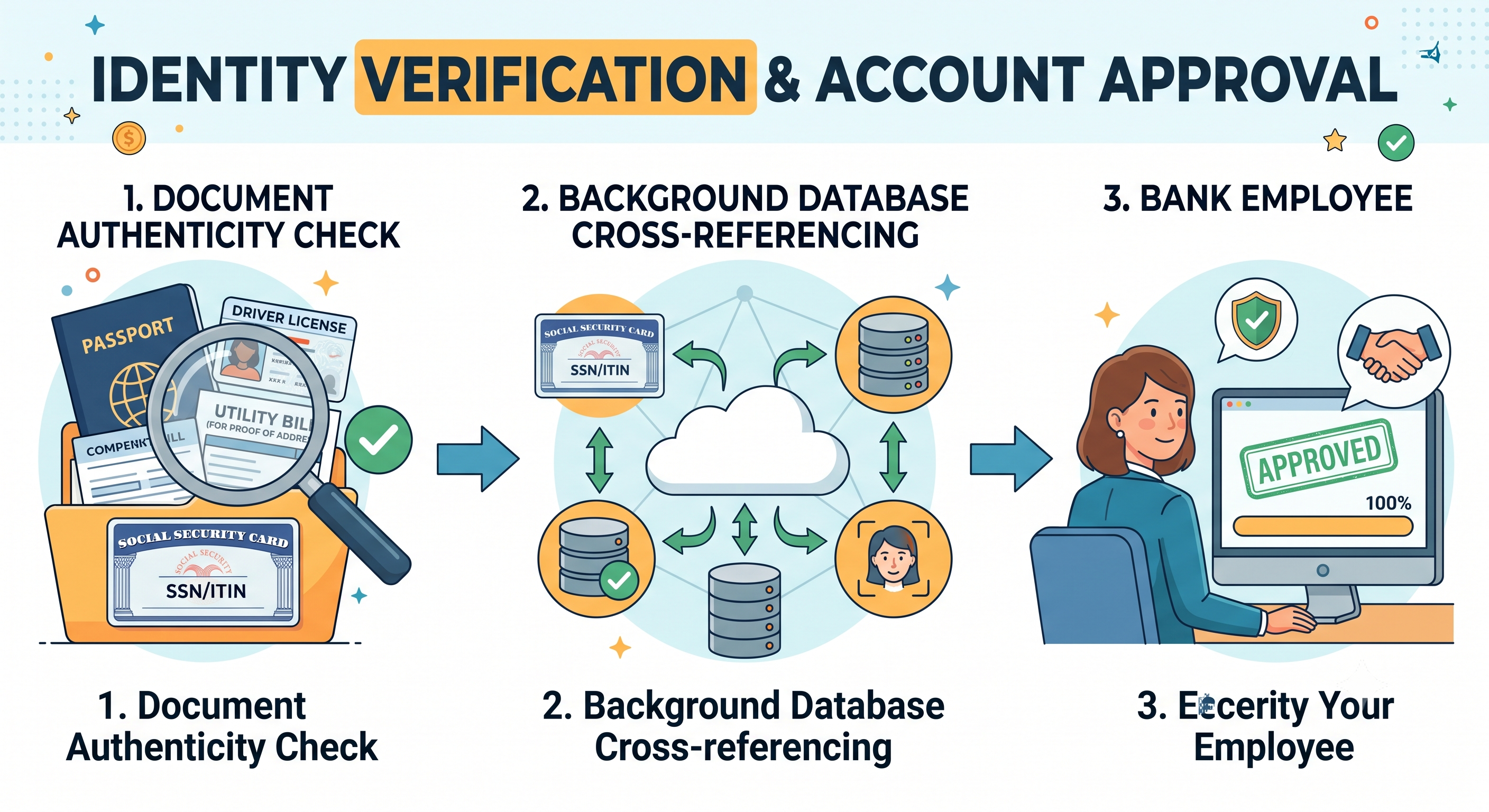
Step 5: Verify Your Identity
The bank may verify your identity electronically or request supporting documents.
Some institutions also conduct identity verification through secure video or in-person appointments.
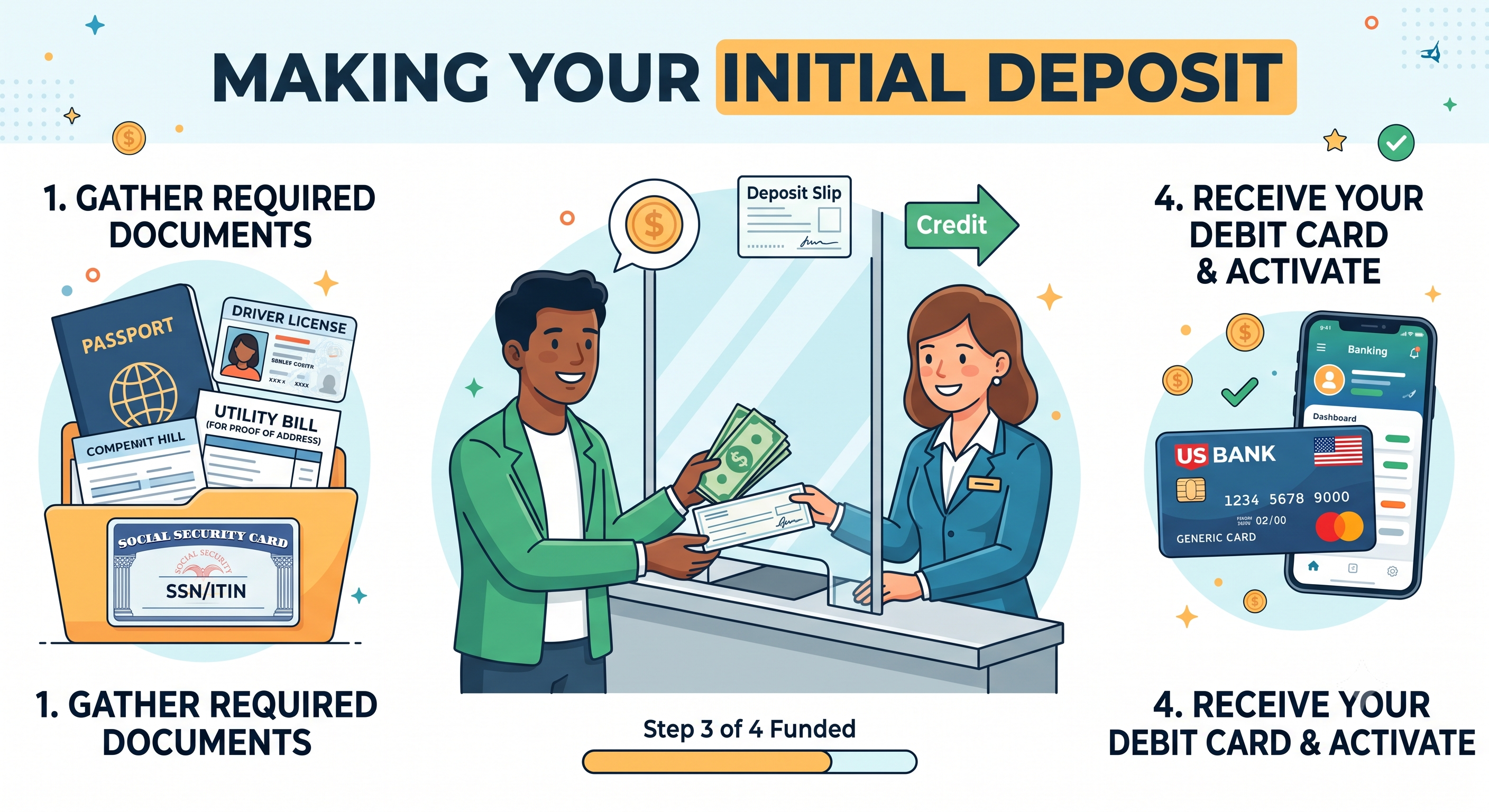
Step 6: Fund Your Account
If required, make the initial deposit using:
- Cash
- Check
- Bank transfer
- Debit card
Some online banks allow funding after the account has been approved.
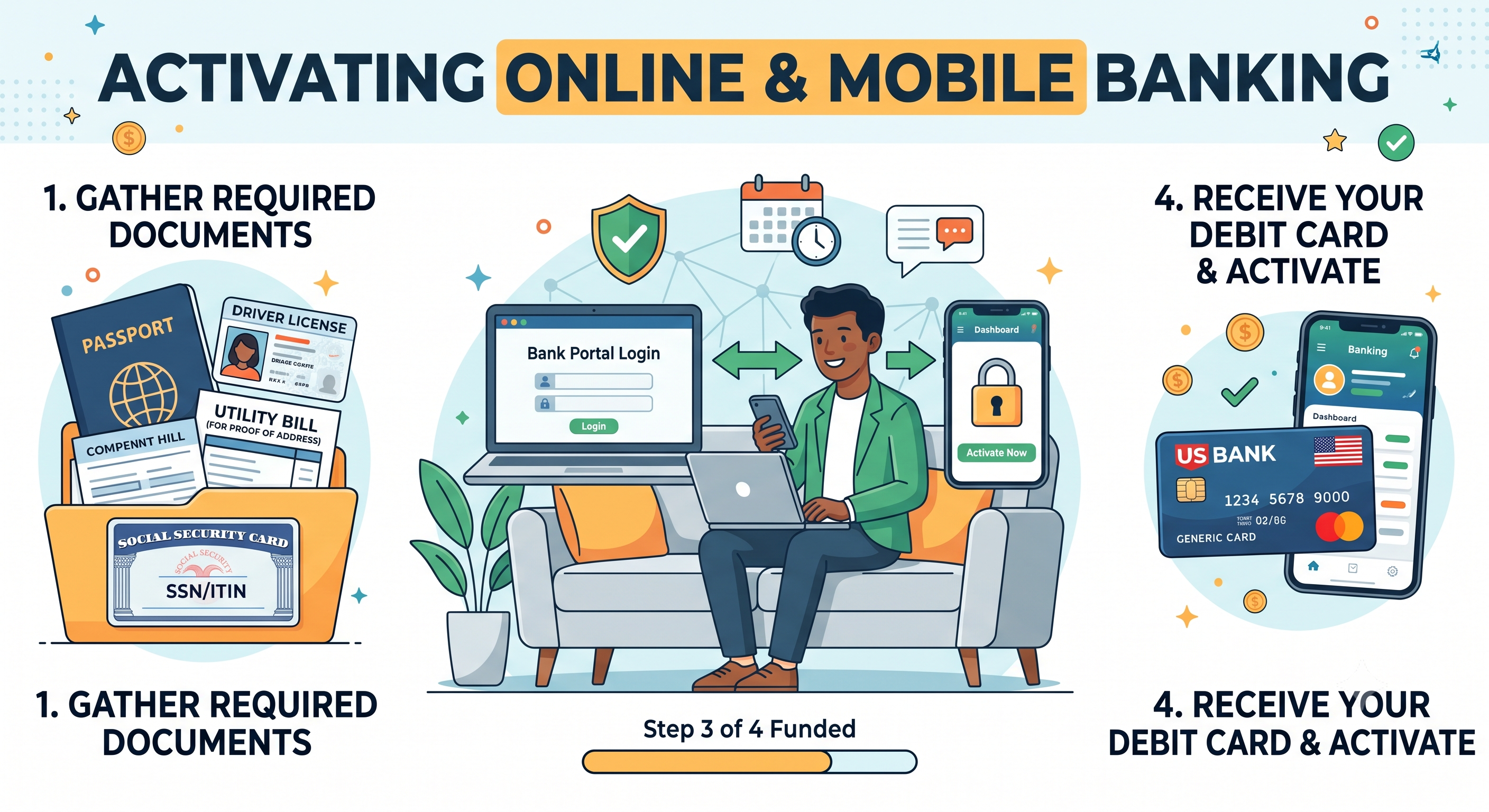
Step 7: Activate Your Banking Services
After approval, you’ll typically receive:
- Debit card
- Online banking access
- Mobile app login
- Routing number
- Account number
You can then begin using your account immediately or once your debit card arrives.
How to Choose the Right Bank
Not every bank offers the same benefits.
Consider these factors carefully.
Monthly Fees
Many banks offer accounts with no monthly maintenance fees.
If fees apply, determine whether they can be waived by maintaining a minimum balance or setting up direct deposit.
ATM Network
A larger ATM network reduces withdrawal fees when traveling.
Some banks also reimburse ATM charges.
Mobile Banking
Look for features such as:
- Mobile check deposit
- Bill payment
- Instant transfers
- Budget tracking
- Account alerts
- Card lock and unlock
A strong mobile app can significantly improve your banking experience.
Customer Support
Reliable customer service becomes valuable if you encounter issues involving fraud, account access, or payments.
Interest Rates
If you’re opening a savings account, compare Annual Percentage Yields (APYs) rather than simply choosing the most familiar bank.
Higher APYs help your savings grow faster.
Common Bank Fees to Understand
Understanding banking fees helps avoid unnecessary expenses.
Monthly Maintenance Fees
Some banks charge monthly service fees unless certain conditions are met.
Overdraft Fees
Overspending your available balance may result in overdraft charges.
Many banks now offer overdraft protection options.
ATM Fees
Using out-of-network ATMs may generate additional fees.
Wire Transfer Fees
Domestic and international transfers sometimes include service charges.
Foreign Transaction Fees
Travelers should verify whether debit card purchases abroad include additional costs.
Online Banks vs Traditional Banks
| Feature | Online Bank | Traditional Bank |
|---|---|---|
| Physical Branches | No | Yes |
| Mobile Banking | Excellent | Excellent |
| ATM Access | Partner networks | Large branch networks |
| Interest Rates | Often Higher | Often Lower |
| Customer Support | Phone, chat, email | Branch and phone |
| Monthly Fees | Often Lower | Varies |
Both options have advantages depending on your banking preferences.
Tips for Managing Your New Bank Account
Once your account is open, good financial habits can help you avoid fees and build a stronger financial future.
Set Up Direct Deposit
Receiving your paycheck electronically provides faster access to funds and may qualify you for fee waivers.
Enable Account Alerts
Notifications for transactions and low balances help detect fraud and avoid overdrafts.
Monitor Your Statements
Review monthly statements regularly to identify unauthorized transactions or billing errors.
Build an Emergency Fund
Automatically transferring money into savings each month encourages long-term financial stability.
Common Mistakes to Avoid
Many new account holders make avoidable mistakes.
Choosing a Bank Without Comparing Fees
Promotional bonuses may not outweigh long-term account costs.
Ignoring Minimum Balance Requirements
Failing to maintain the required balance may trigger monthly service fees.
Forgetting to Update Personal Information
Notify your bank promptly if your address, phone number, or employment changes.
Overlooking Mobile Banking Security
Enable two-factor authentication and use strong passwords to protect your account.
Expert Tips Before Opening a Bank Account
After reviewing banking products from major U.S. banks, credit unions, and online financial institutions, one recommendation consistently stands out: choose a bank based on your long-term financial needs rather than short-term promotions.
For example, a bank offering a generous sign-up bonus may also charge higher monthly maintenance fees or provide limited ATM access. Instead, focus on the overall value, including digital banking features, customer support, fee transparency, and account flexibility.
If you’re new to the U.S., consider choosing a bank with experience serving international customers and multilingual support. Many financial institutions offer specialized accounts for students, newcomers, and individuals without an extensive U.S. banking history.
For additional information about opening bank accounts and consumer banking rights, visit the Consumer Financial Protection Bureau at https://www.consumerfinance.gov/ and read the Wikipedia article on Bank Accounts at https://en.wikipedia.org/wiki/Bank_account. These trusted resources provide valuable educational information about banking products and consumer protections.
Frequently Asked Questions (FAQ)
Can anyone open a bank account in the US?
Short answer: Most people can.
U.S. citizens, permanent residents, international students, and many foreign nationals can open bank accounts if they meet the bank’s eligibility requirements.
What documents do I need to open a bank account?
Short answer: Identification and proof of address.
Most banks require a government-issued ID, proof of address, and, in many cases, a Social Security Number or ITIN.
Can I open a bank account online?
Short answer: Yes.
Many banks allow customers to complete the entire application online, including identity verification.
Do I need a Social Security Number?
Short answer: Not always.
Some banks accept an Individual Taxpayer Identification Number (ITIN) or alternative identification for eligible applicants.
What is the best type of bank account for beginners?
Short answer: A checking account.
Checking accounts are ideal for everyday transactions such as receiving income, paying bills, and using a debit card.
Are online banks safe?
Short answer: Yes, if they are properly regulated.
Choose banks insured by the Federal Deposit Insurance Corporation (FDIC) or credit unions insured by the National Credit Union Administration (NCUA), where applicable.
Can I have both a checking and savings account?
Short answer: Yes.
Many people use checking accounts for daily expenses and savings accounts to build emergency funds and achieve long-term financial goals.
How long does it take to open a bank account?
Short answer: Usually only a few minutes.
Online applications are often completed within minutes, while in-branch applications may take a little longer depending on document verification.
Final Thoughts
Learning how to open a bank account in the US is an important step toward building a strong financial foundation. Whether you choose a traditional bank, a credit union, or an online financial institution, comparing fees, features, security, and customer service will help you select an account that meets your needs.
Take time to understand the terms and conditions, prepare the required documents, and use your account responsibly. A well-chosen bank account can simplify everyday money management, support your savings goals, and provide convenient access to essential financial services for years to come.