
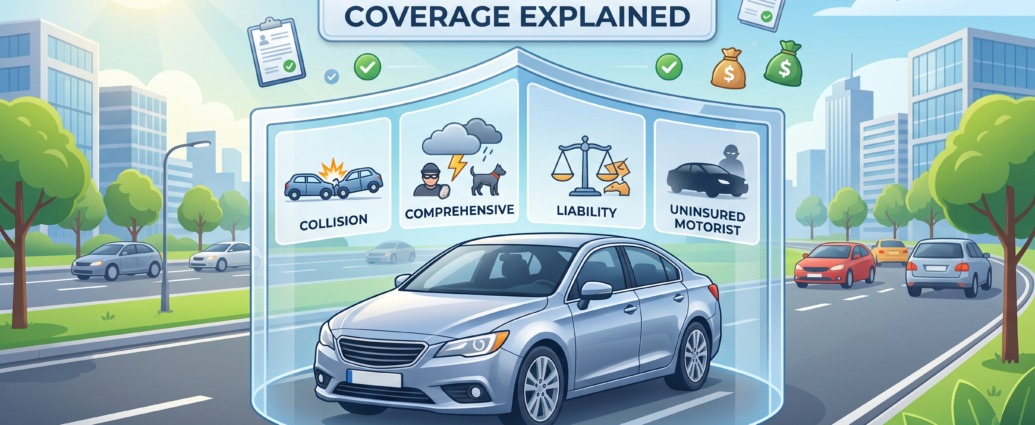
Car insurance can look complicated when you first see a policy declaration page filled with abbreviations, coverage limits, deductibles, and optional protections. Yet understanding the basics can make a significant difference when you are choosing a policy or trying to determine whether your current coverage is adequate.
The most important point is that car insurance is not one single type of coverage. A typical auto policy can contain several different protections, and each one serves a different purpose. Liability coverage may protect you when you cause injuries or property damage to others, while collision and comprehensive coverage can protect your own vehicle from different types of damage.
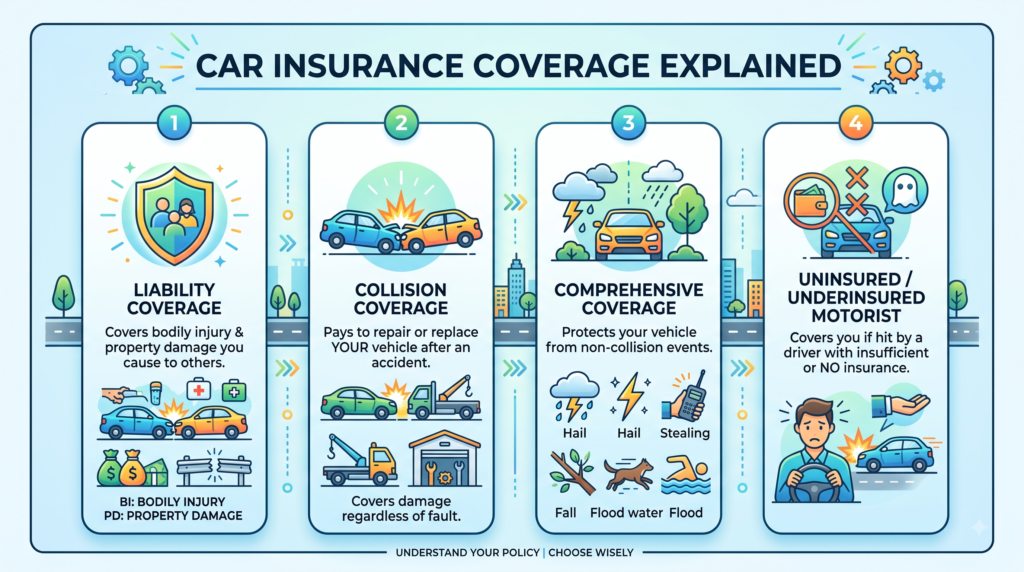
This Car Insurance Coverage Explained guide breaks down the major types of auto insurance coverage, explains deductibles and policy limits, discusses optional protections such as rental reimbursement and roadside assistance, and provides practical tips for comparing policies.
Important: This article focuses primarily on auto insurance in the United States. Insurance requirements and available coverage vary by state and insurer. This information is for general education and is not personalized insurance advice. Review your policy documents and consult your state insurance department or a licensed insurance professional for advice about your circumstances.
What Is Car Insurance?
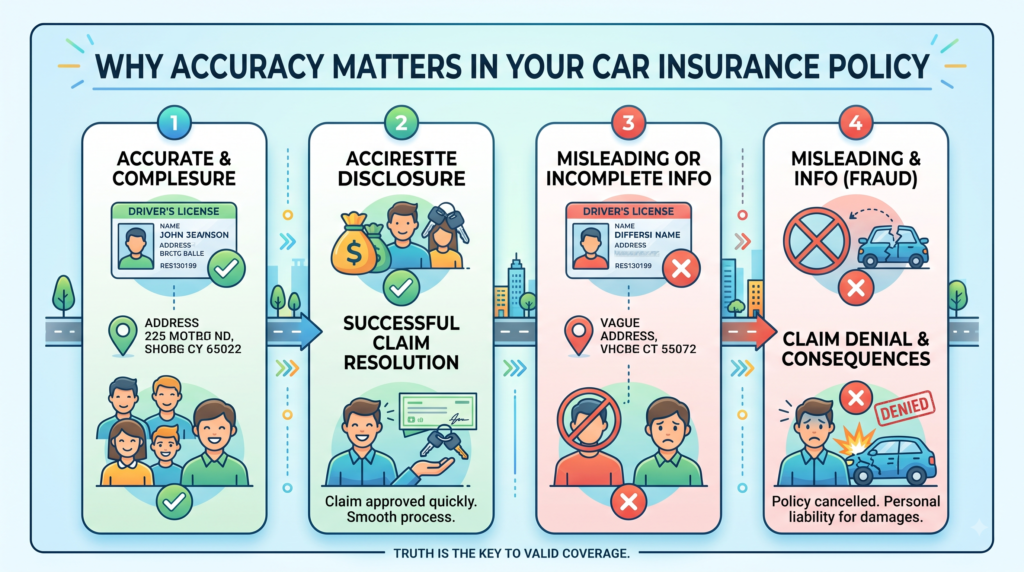
Car insurance is a contract between you and an insurance company. You pay a premium, and the insurer agrees to provide specified financial protection for covered losses, subject to the policy’s terms, limits, deductibles, exclusions, and conditions.
Most states require drivers to carry at least some liability insurance, although the required coverage and minimum limits vary by state. The National Association of Insurance Commissioners (NAIC) explains that auto insurance generally includes liability protection and may include coverage for injuries, uninsured motorists, and physical damage to the vehicle.
The important distinction is this:
Your policy does not automatically cover every type of accident or expense.
The type of coverage you purchase determines what risks the insurer agrees to cover.
Why Understanding Car Insurance Coverage Matters
Many drivers choose insurance by looking only at the monthly premium.
That can be a mistake.
A policy costing $20 less per month may have:
- Lower liability limits
- Higher deductibles
- No rental reimbursement
- No uninsured motorist protection
- No collision coverage
- No comprehensive coverage
A lower premium can therefore mean significantly less protection.
For example, imagine you cause an accident that injures another driver and causes substantial property damage. If your liability limits are too low, you could potentially be responsible for costs above your policy limits, depending on applicable law and the circumstances.
That is why the better question is not:
“Which insurance company is cheapest?”
It is:
“Which policy provides appropriate protection at a price I can afford?”
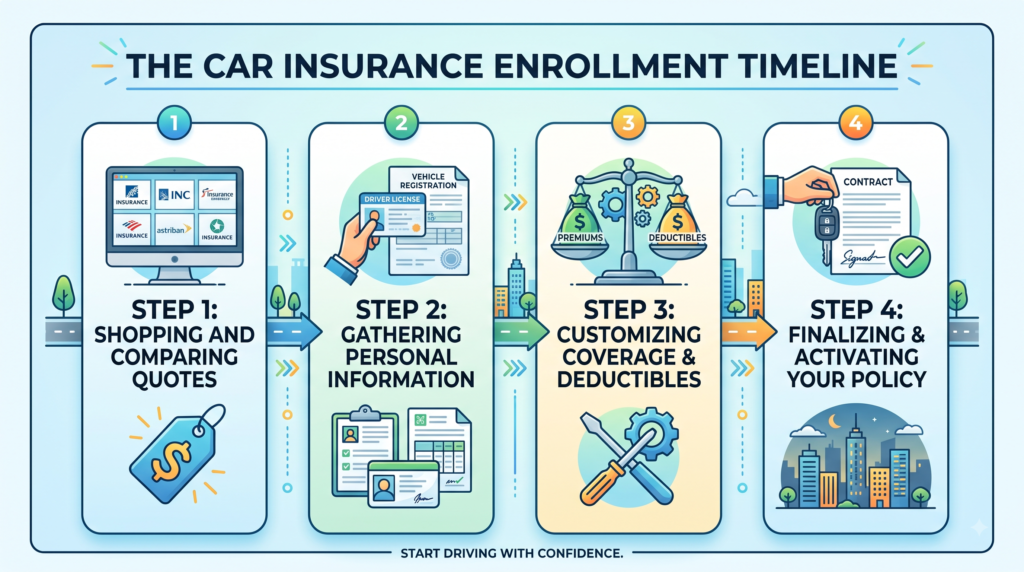
The Main Types of Car Insurance Coverage
Car insurance policies can contain several different coverage categories.
The most important ones are liability, collision, comprehensive, uninsured/underinsured motorist, medical payments, and personal injury protection.
Let’s examine each one.
1. Bodily Injury Liability Coverage
Bodily injury liability coverage is designed to help pay for injuries you cause to other people when you are legally responsible for an accident, subject to the policy terms and limits.
It may cover eligible costs such as:
- Medical expenses
- Lost wages
- Rehabilitation
- Legal defense
- Pain and suffering claims, where applicable
The NAIC identifies bodily injury liability as one of the primary components of auto liability insurance.
Example
Suppose you accidentally run a red light and hit another vehicle.
The other driver suffers injuries and requires medical treatment.
If you are found responsible, your bodily injury liability coverage may help pay eligible claims up to your policy limit.
However, if the claim exceeds your coverage limit, you could potentially face additional financial exposure.
Why liability limits matter
Imagine your policy has a bodily injury limit of $50,000 per person.
If a covered claim results in $100,000 of eligible damages against you, the policy does not automatically become $100,000 simply because the actual loss is higher.
Your policy limit matters.
For this reason, drivers should carefully consider whether state minimum liability limits provide enough protection for their financial circumstances.
2. Property Damage Liability Coverage
Property damage liability coverage helps pay for damage you cause to someone else’s property when you are legally responsible for an accident, subject to the policy terms and limits.
That can include:
- Another vehicle
- A fence
- A building
- A mailbox
- A utility structure
- Other property
Example
You lose control of your vehicle and hit a parked car.
The parked vehicle is damaged.
Your property damage liability coverage may pay for the eligible repairs, up to the policy limit.
The important point is that property damage liability generally protects against damage you cause to someone else’s property—not damage to your own car.
Damage to your own vehicle may require collision or comprehensive coverage.
3. Collision Coverage
Collision coverage is designed to pay for covered physical damage to your vehicle resulting from a collision.
According to the NAIC, collision coverage can apply when your vehicle collides with another vehicle or an object such as a tree. Current NAIC guidance also identifies collisions with objects and potholes among examples of covered collision losses, subject to policy terms.
Examples can include:
- Hitting another vehicle
- Hitting a tree
- Hitting a wall
- Hitting a guardrail
- Certain rollover accidents
- Certain pothole damage
Collision coverage typically has a deductible.
Example
Suppose repairs to your vehicle cost $6,000.
Your collision deductible is:
$1,000
If the loss is covered, you would generally be responsible for the deductible and the insurer would pay the eligible remaining amount, subject to the policy.
Collision coverage is generally optional under state law, but a lender or leasing company may require it when you finance or lease a vehicle.
4. Comprehensive Coverage
Comprehensive coverage protects against many types of damage that are not caused by a collision.
Examples can include:
- Theft
- Fire
- Hail
- Wind
- Flood
- Vandalism
- Falling objects
- Animal strikes
- Certain glass damage
The NAIC describes comprehensive coverage as protection for damage from many non-collision events, including theft, fire, severe weather, vandalism, floods, and animal impacts.
Example
You park your vehicle outside during a severe hailstorm.
The vehicle suffers $4,000 of hail damage.
If comprehensive coverage applies, the insurer may cover the eligible damage after your deductible.
Comprehensive vs. collision
A simple way to remember the distinction is:
Collision: Your vehicle hits something or is involved in a covered collision.
Comprehensive: Your vehicle is damaged by many other covered events.
Both coverages protect your own vehicle, but they cover different types of losses.
5. Uninsured Motorist Coverage
Uninsured motorist coverage can protect you when an at-fault driver has no auto insurance, subject to state law and policy terms.
This can be particularly important because not every driver on the road necessarily carries adequate insurance.
The NAIC reports that about 15.4% of motorists were uninsured in 2023, based on Insurance Research Council data cited by the NAIC.
Depending on the state and policy, uninsured motorist coverage may provide protection for bodily injury and, in some cases, property damage.
Example
Another driver runs a stop sign and hits your car.
The driver is clearly responsible but has no insurance.
Without appropriate protection, recovering your losses may become much more difficult.
Uninsured motorist coverage can provide an additional layer of protection where applicable.
6. Underinsured Motorist Coverage
Underinsured motorist coverage addresses a related problem.
The other driver has insurance—but not enough to cover the full amount of your eligible loss.
Example
Suppose your eligible injury claim is:
$100,000
The at-fault driver’s liability insurance limit is:
$50,000
Underinsured motorist coverage may help cover eligible amounts beyond what the other driver’s policy pays, subject to your own policy limits, state law, and applicable conditions.
Not every state treats uninsured and underinsured motorist coverage in exactly the same way, so review your state’s requirements and your policy carefully.
7. Medical Payments Coverage
Medical payments coverage, sometimes called MedPay, can help pay certain medical or funeral expenses resulting from an auto accident, depending on the policy.
The coverage may apply to:
- You
- Passengers
- Certain other covered individuals
The exact scope varies by state and policy.
The NAIC identifies medical payments coverage as an optional or state-dependent coverage that can help with medical expenses resulting from an automobile accident.
One potential benefit is that it may apply regardless of who was at fault, depending on the policy.
8. Personal Injury Protection (PIP)
Personal Injury Protection, commonly called PIP, can cover certain injury-related expenses after an auto accident.
Depending on state law, PIP may help pay:
- Medical expenses
- Lost wages
- Rehabilitation costs
- Funeral expenses
- Other qualifying expenses
PIP is particularly associated with no-fault insurance systems, although the exact rules differ by state.
The NAIC explains that in no-fault states, PIP generally provides benefits for injuries regardless of fault, while state-specific rules determine how the system operates.
If you live in a state with PIP requirements, you should understand the coverage before choosing your policy limits.
9. Rental Reimbursement Coverage
Rental reimbursement coverage can help pay for a temporary rental vehicle when your insured vehicle is being repaired after a covered loss.
For example, your car is damaged in a covered accident and remains at a repair shop for 10 days.
If your policy includes rental reimbursement, the insurer may pay toward a rental vehicle according to the policy’s daily and total limits.
The NAIC gives rental reimbursement as an example of optional coverage and notes that policies commonly establish daily and total maximum amounts.
Important limitation
Suppose your policy provides:
$30 per day / $900 maximum
If the rental costs $50 per day, you may have to pay the difference.
Always check the daily and total limits.
10. Roadside Assistance and Towing Coverage
Roadside assistance can help with services such as:
- Towing
- Jump-starts
- Flat tires
- Lockouts
- Fuel delivery
The exact services and limits vary.
Before adding roadside assistance to your auto policy, check whether you already receive similar benefits through:
- An automobile club
- Your vehicle manufacturer
- A credit card
- A dealership service plan
The NAIC specifically recommends checking whether another service already provides roadside or rental benefits before purchasing duplicate coverage.
What Is a Car Insurance Deductible?
A deductible is the amount you generally agree to pay toward a covered loss before the insurer pays the remaining eligible amount.
For example:
Repair cost: $5,000
Deductible: $1,000
If the entire repair is covered, you would generally pay $1,000 and the insurer would pay the remaining $4,000.
Deductibles commonly apply to collision and comprehensive coverage.
Higher deductible vs. lower deductible
A higher deductible generally reduces the premium.
A lower deductible generally increases the premium.
For example:
$500 deductible: Higher premium
$1,000 deductible: Lower premium
But don’t choose a deductible simply because it produces a cheaper quote.
Ask yourself:
“Could I comfortably pay this amount tomorrow if my vehicle were damaged?”
If the answer is no, the deductible may be too high for your financial situation.
The NAIC similarly recommends choosing a deductible you can afford and notes that higher deductibles generally result in lower premiums.
What Are Car Insurance Coverage Limits?
A coverage limit is the maximum amount the insurer will pay for a covered claim under a particular coverage, subject to the policy terms.
For example, you might see liability limits written as:
100/300/100
This commonly means:
- $100,000 bodily injury per person
- $300,000 bodily injury per accident
- $100,000 property damage per accident
The exact terminology and available limits can vary by state and insurer.
Why limits matter
A policy with a low premium may have relatively low liability limits.
If you have significant assets or income to protect, you may want to discuss higher liability limits with a licensed insurance professional.
What Does “Full Coverage” Car Insurance Mean?
The phrase “full coverage” is commonly used by consumers and insurance agents, but it is not a universal insurance product that covers everything.
Usually, people use the term to describe a policy that includes:
- Liability coverage
- Collision coverage
- Comprehensive coverage
However, a so-called “full coverage” policy can still have:
- Deductibles
- Coverage limits
- Exclusions
- Uninsured motorist limits
- No rental reimbursement
- No roadside assistance
- No GAP coverage
The NAIC notes that comprehensive and collision are commonly included when people refer to “full coverage,” particularly when a vehicle is financed, but the exact package depends on the policy.
Therefore, don’t ask only:
“Do I have full coverage?”
Instead, ask:
“What coverages, limits, deductibles, and exclusions are actually listed on my policy?”
What Car Insurance Does Not Usually Cover
Car insurance does not automatically cover every possible vehicle-related expense.
Potential exclusions or separate coverage needs can include:
- Mechanical breakdown
- Normal wear and tear
- Maintenance
- Certain personal belongings inside the vehicle
- Certain business uses
- Damage beyond policy terms
- Loan balances exceeding vehicle value
For example, comprehensive coverage may cover theft of the vehicle, but it does not mean your policy will automatically cover every item you leave inside the car.
Similarly, if your vehicle is worth $15,000 but you owe $20,000 on the auto loan, standard collision and comprehensive coverage generally does not automatically pay the extra $5,000.
That situation is where GAP insurance may be relevant.
The NAIC specifically notes that GAP coverage addresses situations where the vehicle’s market value is less than the outstanding loan balance.
What Is GAP Insurance?
GAP stands for Guaranteed Asset Protection.
It can help cover the difference between:
What your insurer pays for a covered total loss
and
What you still owe on the vehicle loan or lease
Example
You owe:
$25,000
Your vehicle’s actual value at the time of a covered total loss is:
$20,000
There is a:
$5,000 gap
Standard physical-damage coverage may generally be based on the vehicle’s covered value rather than your remaining loan balance.
GAP coverage may help address that difference, subject to its terms.
This can be particularly relevant when you make a small down payment or finance a vehicle for a long period.
How Car Insurance Premiums Are Determined
Your insurance premium depends on how the insurer evaluates risk and prices the policy.
Factors can include:
- Driving record
- Claims history
- Location
- Vehicle
- Coverage limits
- Deductibles
- Annual mileage
- Driver characteristics
- Insurance history
- Discounts
- Other underwriting factors
The NAIC explains that insurers use underwriting to assess risk and rating to determine the price of assuming that risk.
The vehicle itself matters too.
A vehicle that is expensive to repair or has higher claims costs can potentially cost more to insure.
How to Lower Your Car Insurance Premium
There are several legitimate ways to reduce insurance costs without automatically eliminating important protection.
Compare multiple insurers
Don’t assume your current insurer is always the cheapest.
Get quotes from multiple companies using the same coverage limits and deductibles.
The NAIC recommends comparing equivalent coverage when shopping so that you are making a meaningful price comparison.
Ask about discounts
Depending on the insurer, discounts may be available for:
- Multiple vehicles
- Bundling policies
- Defensive driving
- Safety equipment
- Anti-theft devices
- Good student status
- Other qualifying factors
The NAIC lists several types of discounts consumers can ask insurers about.
Consider your deductible
If you have enough savings to handle a higher deductible, increasing it may reduce your premium.
But only do this if the deductible remains affordable.
Review your mileage
If you drive significantly fewer miles than before, tell your insurer.
Mileage can be one of the factors used in pricing.
Review your vehicle choice
Insurance costs can vary significantly between vehicles.
Before purchasing a new car, request an insurance quote for that exact model.
This is especially useful when comparing vehicles with different repair costs, theft rates, safety characteristics, or performance.
How to Compare Car Insurance Quotes Correctly
One of the biggest mistakes consumers make is comparing only the premium.
Suppose you receive:
Quote A
- Premium: $1,400
- Liability: 25/50/25
- Collision deductible: $1,500
- Comprehensive deductible: $1,500
Quote B
- Premium: $1,550
- Liability: 100/300/100
- Collision deductible: $500
- Comprehensive deductible: $500
Quote A is cheaper.
But they are not equivalent policies.
Quote B provides substantially different limits and deductibles.
Therefore, when comparing insurers, make the coverage as similar as possible.
The NAIC’s consumer shopping tool specifically recommends comparing liability limits, uninsured/underinsured motorist coverage, medical coverage, deductibles, optional coverage, and total premiums.
How to Read Your Car Insurance Declaration Page
Your declarations page is one of the most useful documents in your insurance policy.
It typically identifies:
- Policyholder
- Covered vehicles
- Policy period
- Coverage limits
- Deductibles
- Premium
- Lienholder, if applicable
The NAIC describes the declarations page as an important part of the policy and recommends checking the information carefully for accuracy.
Check that:
- Your name is correct
- Your address is correct
- Vehicle information is correct
- Drivers are listed correctly
- Coverage limits are what you intended
- Deductibles are correct
- Discounts are applied
- Your lender is listed if applicable
An incorrect address or vehicle classification can potentially cause problems when a claim occurs.
What Happens When Your Car Is Totaled?
A vehicle may be considered a total loss when repairing it is not economically practical or when state-specific rules classify it as a total loss.
If the insurer declares your vehicle a total loss, the settlement is generally based on the vehicle’s covered value under the applicable policy and state rules—not simply what you originally paid.
The NAIC notes that an insurer may pay based on what the vehicle was actually worth immediately before the loss, and that a consumer should independently research comparable vehicles when reviewing a settlement.
Example
You purchased a vehicle for:
$30,000
Several years later, its market value may be:
$18,000
If it is totaled, you should not automatically expect a $30,000 settlement.
The relevant value is generally the vehicle’s value immediately before the covered loss, subject to the policy and applicable law.
Car Insurance for a Financed or Leased Vehicle
If you finance or lease a vehicle, your lender or leasing company may require certain coverage.
Typically, lenders want protection for the vehicle itself, meaning collision and comprehensive coverage may be required.
The NAIC confirms that lenders or lessors may require collision and comprehensive coverage even though those coverages are generally not required by state law.
You should also make sure the lender or leasing company is correctly listed on the policy.
Once the loan is paid off, notify your insurer so the lienholder information can be updated or removed when appropriate.
Reliable Resources for Understanding Car Insurance
Because auto insurance is a regulated financial product, consumers should use reliable sources when researching coverage.
The National Association of Insurance Commissioners (NAIC) provides consumer information about auto insurance coverage, deductibles, liability, collision, comprehensive, uninsured motorists, and shopping for insurance.
NAIC Auto Insurance Consumer Resources
The NAIC also provides a current consumer guide explaining what different types of auto insurance cover and how state requirements can vary.
NAIC: What Does Auto Insurance Cover?
For state-specific requirements, consumers should also consult their state’s insurance department because minimum coverage requirements and insurance rules are not identical across the United States.
Using authoritative regulatory information is particularly important when comparing insurance policies because a policy that is appropriate in one state may not meet the requirements or provide the same protections in another.
Car Insurance Coverage Explained: A Practical Checklist
Before purchasing or renewing your policy, review these items:
- Liability limits
- Uninsured motorist coverage
- Underinsured motorist coverage
- Collision coverage
- Comprehensive coverage
- Medical payments or PIP
- Collision deductible
- Comprehensive deductible
- Rental reimbursement
- Roadside assistance
- GAP coverage
- Annual mileage
- Listed drivers
- Vehicle information
- Available discounts
Don’t assume your current policy is still appropriate simply because you have had it for several years.
Your circumstances can change.
You may have:
- Bought a new vehicle
- Paid off your loan
- Moved to another state
- Started driving fewer miles
- Added a household driver
- Removed a vehicle
- Built more savings
- Changed your financial situation
Any of these changes may justify reviewing your coverage.
Final Thoughts on Car Insurance Coverage Explained
Understanding car insurance is less about memorizing insurance terminology and more about knowing which financial risks your policy actually protects against.
Liability coverage protects against certain claims arising from injuries or property damage you cause to others. Collision and comprehensive coverage can protect your own vehicle from different types of physical damage. Uninsured and underinsured motorist coverage can provide another layer of protection when the other driver lacks adequate insurance.
Optional protections such as rental reimbursement, roadside assistance, medical payments, PIP, and GAP coverage may also be valuable depending on your circumstances.
The right policy is not necessarily the one with the lowest premium.
A better policy comparison considers:
Coverage + limits + deductibles + exclusions + price
When shopping, request multiple quotes and make sure the coverage is comparable. A $100 difference in annual premium means very little if one policy has dramatically lower liability limits or higher deductibles.
Finally, review your declarations page regularly and update your insurer when important circumstances change.
Good car insurance is not simply about satisfying a legal requirement. It is about choosing an appropriate level of financial protection for the risks you face on the road.
Frequently Asked Questions About Car Insurance Coverage
1. What is car insurance coverage?
Car insurance coverage is financial protection provided under an auto insurance policy for specific risks, such as liability claims, vehicle damage, injuries, theft, or other covered losses.
2. What does liability insurance cover?
Liability insurance generally covers certain injuries and property damage you cause to other people when you are legally responsible, subject to your policy limits and conditions.
3. What is the difference between collision and comprehensive insurance?
Collision generally covers damage to your vehicle resulting from a covered collision, while comprehensive generally covers many non-collision events such as theft, fire, hail, vandalism, and animal damage.
4. Is comprehensive insurance required?
Generally, state law does not require comprehensive coverage, but a lender or leasing company may require it when a vehicle is financed or leased.
5. Is collision insurance required?
Collision is generally optional under state law, but lenders and leasing companies may require it for financed or leased vehicles.
6. What does full coverage car insurance mean?
“Full coverage” is an informal term usually referring to liability plus collision and comprehensive coverage. It does not mean every possible loss is covered.
7. What is an insurance deductible?
A deductible is the amount you generally pay toward a covered loss before your insurer pays the remaining eligible amount.
8. Does a higher deductible lower car insurance costs?
Generally, yes. Choosing a higher deductible can reduce your premium, but you should make sure you can afford that deductible after an accident.
9. What is uninsured motorist coverage?
Uninsured motorist coverage can protect you in certain situations involving an at-fault driver who has no insurance, subject to state law and your policy.
10. What is underinsured motorist coverage?
Underinsured motorist coverage can provide protection when the at-fault driver’s insurance is insufficient to cover an eligible loss, subject to your policy and state rules.
11. Do I need uninsured motorist coverage?
Requirements vary by state, but even where it is optional, it can provide valuable protection against drivers who lack adequate insurance.
12. What is PIP insurance?
Personal Injury Protection, or PIP, is coverage that can pay certain injury-related expenses after an automobile accident, often regardless of fault in states using no-fault systems.
13. What is medical payments coverage?
Medical payments coverage can help pay certain medical or funeral expenses resulting from an auto accident, subject to the policy and applicable state rules.
14. Does car insurance cover theft?
Comprehensive coverage generally covers theft of the insured vehicle, subject to the policy terms and deductible.
15. Does comprehensive insurance cover hail damage?
Yes, hail damage is generally an example of a loss covered by comprehensive insurance, subject to the policy’s terms and deductible.
16. Does collision insurance cover hitting a pothole?
Collision coverage may cover eligible damage caused by hitting a pothole, subject to the policy and deductible.
17. Does car insurance cover mechanical problems?
Standard auto insurance generally is not designed to cover normal mechanical breakdown or maintenance. Separate mechanical breakdown coverage or a service contract may be relevant depending on the situation.
18. What is rental reimbursement coverage?
Rental reimbursement coverage can help pay for a temporary rental vehicle when your insured car is being repaired following a covered loss, subject to daily and total limits.
19. What is GAP insurance?
GAP insurance can help cover the difference between a vehicle’s covered value after a total loss and the remaining loan or lease balance, subject to the GAP contract.
20. How can I lower my car insurance premium?
You can compare insurers, ask about discounts, consider an affordable higher deductible, review mileage, and regularly check whether your coverage still matches your needs.
21. Should I compare car insurance quotes?
Yes. Comparing multiple insurers can help you identify competitive pricing, but make sure you compare similar coverage limits and deductibles rather than comparing premiums alone.
22. How often should I review my car insurance?
Review your policy at least when major circumstances change, such as buying a vehicle, adding a driver, moving, paying off a loan, or significantly changing how much you drive.
23. Does the cheapest car insurance provide the best value?
Not necessarily. A cheaper policy may have lower coverage limits, higher deductibles, or fewer optional protections. Compare the complete policy rather than the premium alone.
24. What should I check on my car insurance declaration page?
Check your name, address, vehicles, drivers, coverage limits, deductibles, discounts, policy dates, premium, and lender information if applicable.
25. Where can I find reliable car insurance information?
The National Association of Insurance Commissioners and your state insurance department are strong starting points for understanding auto insurance requirements, coverage, and consumer protections.
Editorial and E-E-A-T Note
Last Updated: August 2026
Insurance rules, required minimum coverage, premiums, available discounts, and policy features can change. This article uses consumer guidance from the National Association of Insurance Commissioners (NAIC) and should be treated as general educational information rather than personalized insurance advice.
For state-specific requirements, readers should consult their state’s department of insurance or a licensed insurance professional.