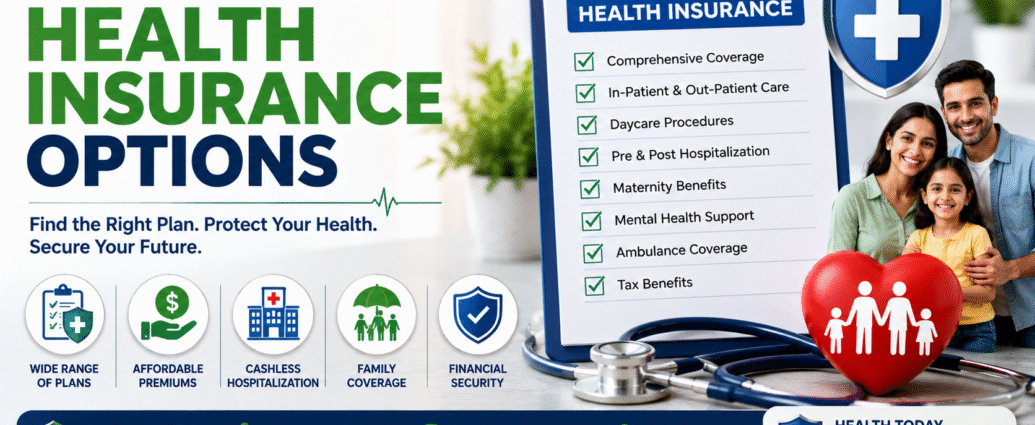
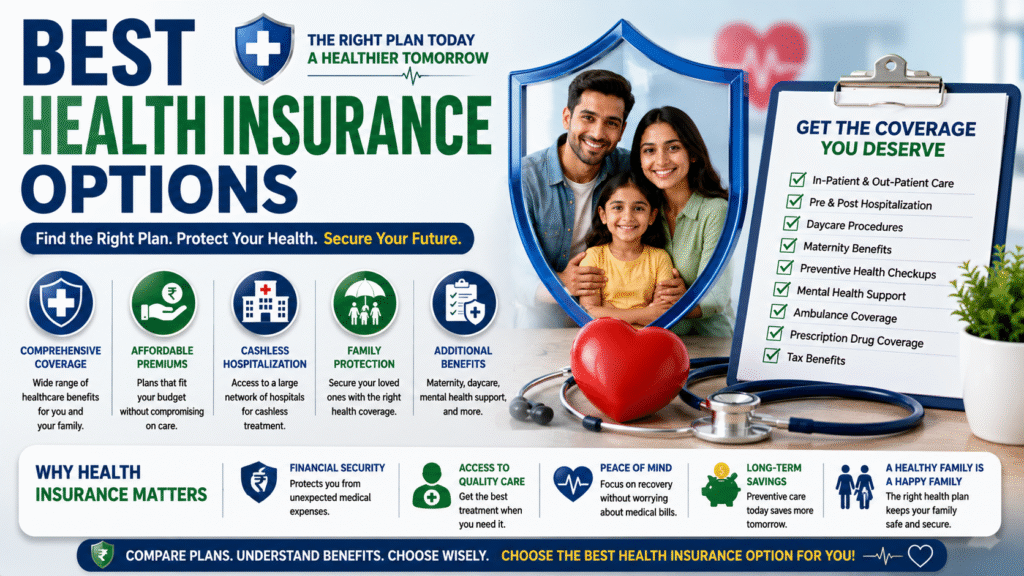
Health insurance is one of the most important financial tools you can have. Medical emergencies and routine healthcare costs can quickly become expensive, making the right insurance plan essential for protecting both your health and your finances. With numerous providers and policy types available, finding the best health insurance options can seem overwhelming.
The right plan depends on more than just the monthly premium. Factors such as coverage, deductibles, provider networks, prescription benefits, out-of-pocket costs, and customer service all play a significant role in determining a policy’s overall value.
In this guide, you’ll learn how health insurance works, the different types of plans available, the features to compare, and practical tips for choosing the best health insurance option in 2026.
What Is Health Insurance?
Health insurance is a contract between you and an insurance company that helps cover eligible medical expenses in exchange for regular premium payments.
Depending on the policy, health insurance may help pay for:
- Doctor visits
- Hospital stays
- Emergency care
- Prescription medications
- Preventive care
- Diagnostic tests
- Surgery
- Specialist consultations
- Mental health services
Without adequate insurance, unexpected medical bills can place significant strain on your finances.
Why Health Insurance Matters
Many people view health insurance as protection against major medical emergencies. While that’s true, it also supports preventive care and regular medical treatment that can improve long-term health outcomes.
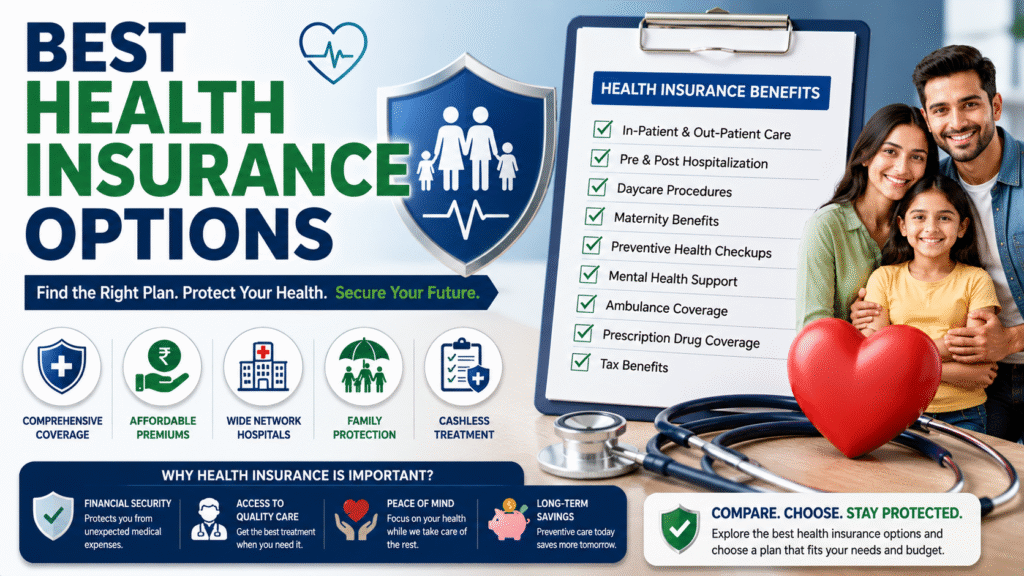
A good health insurance plan can help you:
- Reduce unexpected medical expenses
- Access quality healthcare providers
- Receive preventive screenings
- Manage chronic conditions
- Protect your family’s financial future
- Gain peace of mind during medical emergencies
Health insurance is not simply an expense—it’s an investment in your financial security.
Types of Health Insurance Plans
Understanding the different plan types helps you choose coverage that matches your healthcare needs.
Individual Health Insurance
Designed for a single person, these plans provide coverage based on the individual’s medical needs and budget.
They are suitable for freelancers, self-employed professionals, and people without employer-sponsored insurance.
Family Health Insurance
A family plan covers multiple eligible family members under one policy.
This option often simplifies policy management and may provide better overall value than purchasing separate plans.
Employer-Sponsored Health Insurance
Many employers offer group health insurance as part of employee benefits.
These plans often include lower premiums because employers contribute toward the cost.
Government-Sponsored Health Coverage
Some individuals may qualify for government healthcare programs depending on age, income, disability status, or other eligibility requirements.
Coverage and eligibility vary by country and region.
Short-Term Health Insurance
Short-term plans provide temporary coverage for people transitioning between insurance policies or employment.
These plans may have limited benefits compared with comprehensive health insurance.
Key Features to Compare
Choosing among the best health insurance options requires comparing more than monthly premiums.
Monthly Premium
The premium is the amount you pay regularly to keep your insurance active.
Lower premiums may seem attractive, but they can sometimes be paired with higher deductibles or out-of-pocket costs.
Deductible
A deductible is the amount you generally pay for covered healthcare services before your insurance begins sharing costs.
Understanding your deductible helps you estimate your total healthcare expenses.
Out-of-Pocket Maximum
This represents the maximum amount you’ll typically pay for covered healthcare during a policy year.
Once this limit is reached, the insurer generally covers eligible services according to the policy terms.
Provider Network
Many insurance plans work with specific hospitals, doctors, and clinics.
Choosing an in-network provider often results in lower healthcare costs.
Always verify that your preferred healthcare providers participate in the plan’s network.
Prescription Drug Coverage
Prescription benefits vary between policies.
Review:
- Covered medications
- Generic drug coverage
- Specialty medication coverage
- Pharmacy network
These factors can significantly affect long-term healthcare costs.
Preventive Care Benefits
Many comprehensive health insurance plans include preventive services such as:
- Annual health checkups
- Vaccinations
- Cancer screenings
- Blood pressure monitoring
- Diabetes screening
Preventive care helps detect health conditions early.
How to Choose the Best Health Insurance Option
Selecting the right health insurance plan requires balancing cost with coverage.
Assess Your Healthcare Needs
Think about:
- Current medical conditions
- Prescription medications
- Planned surgeries
- Family medical history
- Frequency of doctor visits
Choosing a policy based on your actual healthcare needs often provides better long-term value.
Compare Total Costs
Many people compare only premiums.
Instead, evaluate:
- Premiums
- Deductibles
- Copayments
- Coinsurance
- Out-of-pocket maximums
The lowest premium isn’t always the least expensive option overall.
Review Coverage Limits
Read the policy carefully to understand:
- Covered treatments
- Exclusions
- Waiting periods
- Annual coverage limits
- Specialist referrals
Knowing these details helps avoid unexpected expenses later.
Check Customer Satisfaction
A strong insurer should provide:
- Fast claims processing
- Helpful customer service
- Easy online account management
- Clear policy documentation
Reading independent customer reviews may provide useful insights.
Benefits of Having Health Insurance
A quality health insurance policy offers numerous advantages beyond emergency medical coverage.
Financial Protection
Large medical bills become more manageable when insurance shares eligible healthcare costs.
Access to Better Healthcare
Insurance often provides access to broader networks of healthcare professionals and hospitals.
Preventive Care
Routine checkups and screenings help identify health issues before they become serious.
Peace of Mind
Knowing you’re financially protected during medical emergencies reduces stress and uncertainty.
Family Security
Health insurance helps protect your loved ones from unexpected healthcare expenses.
Common Mistakes When Buying Health Insurance
Many people choose plans based solely on price.
Avoid these common mistakes.
Choosing the Lowest Premium
A lower monthly premium may come with significantly higher deductibles and out-of-pocket costs.
Ignoring Network Restrictions
Receiving care outside your plan’s provider network may increase your expenses substantially.
Overlooking Prescription Coverage
Medication costs can vary significantly between insurance plans.
Always review the plan’s drug coverage.
Not Reading the Policy
Understanding exclusions, waiting periods, and coverage limitations helps prevent unpleasant surprises.
Expert Tips for Choosing Health Insurance
After reviewing numerous health insurance policies and comparing plan features, one lesson stands out: the best policy isn’t necessarily the one with the lowest premium—it’s the one that offers the right balance of coverage, affordability, and access to quality healthcare.
Before enrolling, estimate your expected healthcare usage for the coming year. If you anticipate regular doctor visits, ongoing prescriptions, or specialist care, a plan with a higher premium but lower out-of-pocket costs may ultimately save you money.
It’s also wise to review your policy annually. Health needs change over time, and insurers frequently update premiums, provider networks, and covered benefits.
Health Insurance vs Medical Discount Plans
| Feature | Health Insurance | Medical Discount Plan |
|---|---|---|
| Insurance Coverage | Yes | No |
| Pays Eligible Medical Costs | Yes | No |
| Monthly Premium | Yes | Usually Lower |
| Network Providers | Yes | Yes |
| Emergency Protection | Yes | Limited |
| Best For | Comprehensive healthcare | Discounts on certain services |
Medical discount plans are not insurance and should not be viewed as a replacement for comprehensive health coverage.
Is Health Insurance Worth It?
For most individuals and families, the answer is yes.
Health insurance provides financial protection, improves access to medical care, and reduces the risk of overwhelming healthcare expenses. Even healthy individuals can benefit from preventive services and protection against unexpected accidents or illnesses.
Rather than selecting the cheapest plan, focus on finding coverage that fits your health needs, financial situation, and preferred healthcare providers.
Learn More About Health Insurance
If you’d like to better understand how health insurance works and compare different types of coverage, these trusted resources provide reliable information:
- Healthcare.gov: https://www.healthcare.gov/
- Wikipedia – Health Insurance: https://en.wikipedia.org/wiki/Health_insurance
These resources explain health insurance concepts, consumer rights, and plan options in greater detail.
Frequently Asked Questions (FAQ)
What is health insurance?
Short answer: Health insurance helps cover eligible medical expenses in exchange for regular premium payments.
Coverage varies depending on the policy.
What should I compare before buying health insurance?
Short answer: Compare premiums, deductibles, provider networks, prescription coverage, and out-of-pocket costs.
Looking at the total cost provides a clearer picture than comparing premiums alone.
Is the cheapest health insurance always the best?
Short answer: No.
Lower premiums may come with higher deductibles, limited provider networks, or reduced coverage.
What is a deductible?
Short answer: A deductible is the amount you generally pay before your insurance begins sharing covered healthcare costs.
Policies differ in how deductibles apply.
Can I keep my current doctor?
Short answer: It depends.
Check whether your doctor participates in the insurance plan’s provider network before enrolling.
Does health insurance cover prescription drugs?
Short answer: Many plans do.
However, covered medications and costs vary by insurer and policy.
Should healthy people still buy health insurance?
Short answer: Yes.
Unexpected illnesses or accidents can occur at any time, and preventive care offers additional long-term benefits.
How often should I review my health insurance?
Short answer: At least once a year.
Annual reviews help ensure your coverage continues to meet your healthcare and financial needs.