
Your credit score is one of the most important numbers in your financial life. Whether you’re applying for a credit card, personal loan, mortgage, auto loan, or even renting an apartment, lenders and other financial institutions often use your credit score to assess how responsibly you’ve managed credit in the past.
Despite its importance, many people don’t fully understand how credit scores work. Some believe checking their score lowers it, while others assume paying off a loan instantly guarantees a perfect score. In reality, credit scores are calculated using multiple factors that reflect your overall borrowing behavior rather than a single financial decision.
Understanding how credit scores are calculated can help you qualify for better loan terms, lower interest rates, higher credit limits, and improved financial opportunities. This guide explains the fundamentals of credit scoring, the factors that influence your score, common misconceptions, and practical strategies to build strong credit over time.
What Is a Credit Score?
A credit score is a numerical representation of your creditworthiness. It helps lenders estimate how likely you are to repay borrowed money based on your past credit behavior.
Although different credit scoring models exist, most scores generally fall within a specific range, where higher scores indicate lower lending risk.
A strong credit score can improve your chances of obtaining:
- Credit cards
- Personal loans
- Home mortgages
- Auto loans
- Rental housing
- Better insurance rates (where permitted)
- Lower borrowing costs
Rather than judging your income alone, lenders use your credit score as one part of a broader financial evaluation.
Why Credit Scores Matter
Your credit score affects far more than loan approvals.
A healthy credit profile may help you:
- Qualify for lower interest rates
- Receive higher credit limits
- Access premium credit card rewards
- Improve mortgage approval chances
- Reduce borrowing costs
- Strengthen financial flexibility
Even small improvements in your score can lead to meaningful savings over the life of a loan.
How Credit Scores Are Calculated
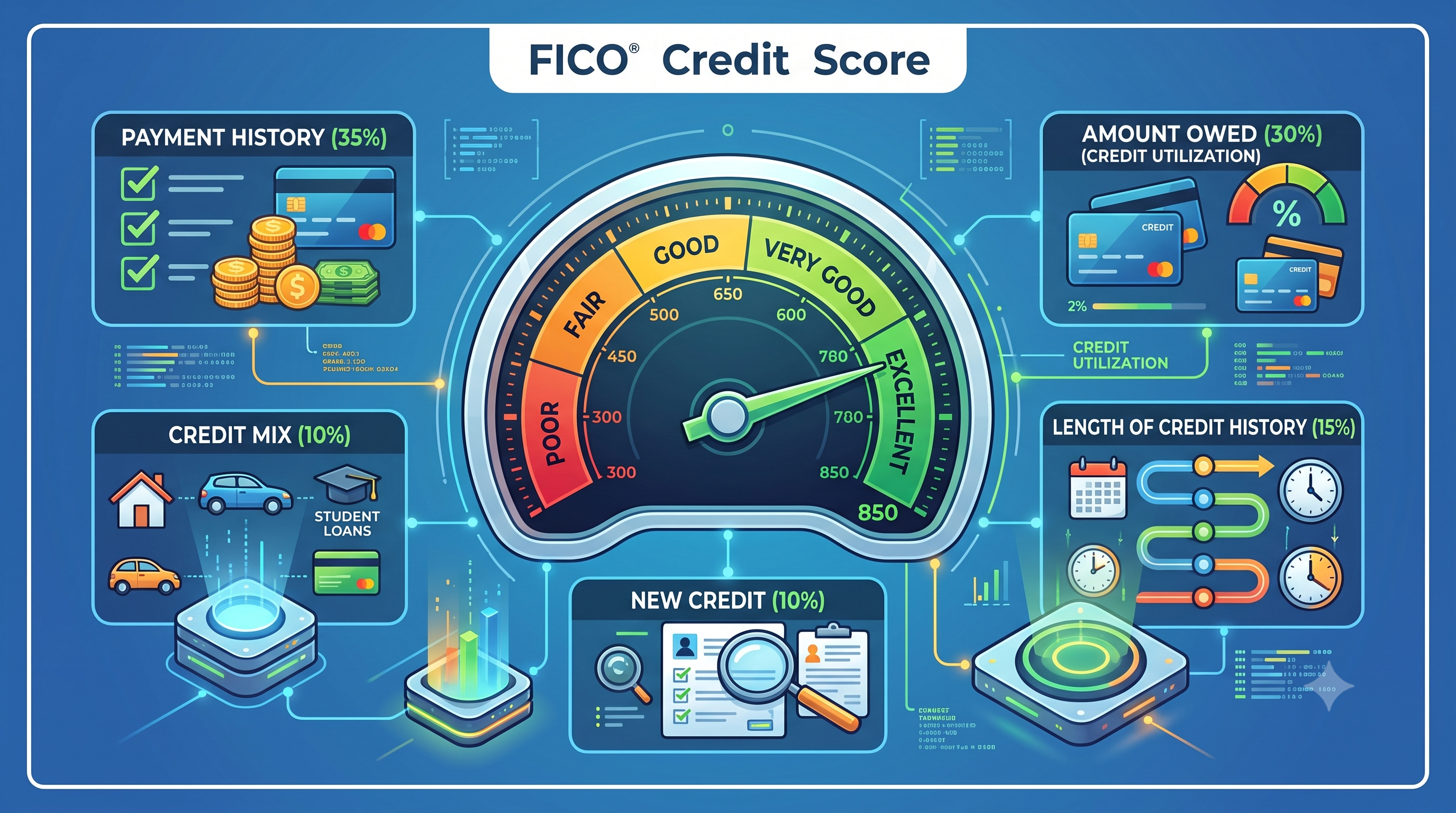
Credit scores are calculated using information contained in your credit reports. While exact formulas vary among scoring models, most evaluate similar financial behaviors.
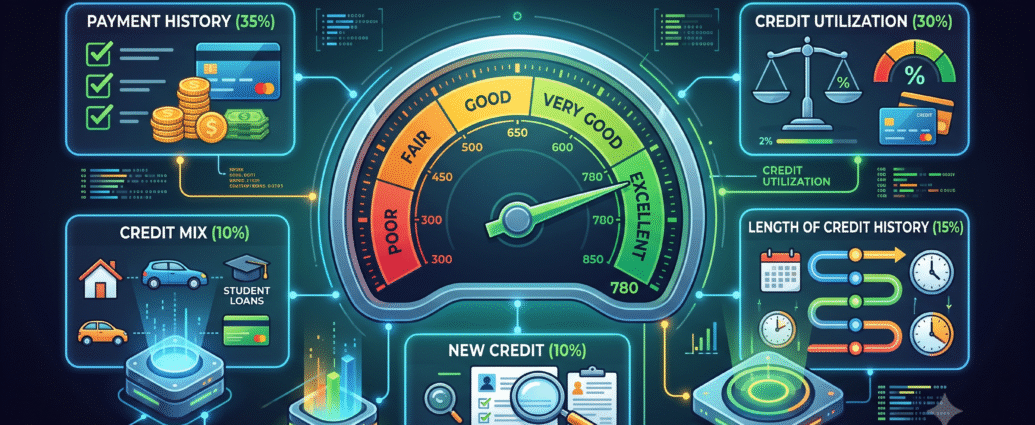
Payment History
Payment history is generally considered the most influential factor.
Lenders want to know whether you consistently pay your bills on time.
Positive payment history demonstrates responsible borrowing, while missed or late payments can negatively affect your credit profile.
Simple habits such as scheduling automatic payments can help maintain a strong payment record.
Credit Utilization
Credit utilization measures how much of your available revolving credit you’re currently using.
For example:
- Credit limit: $10,000
- Current balance: $2,000
Your utilization is 20%.
Lower utilization generally indicates responsible credit management.
Many financial experts recommend keeping utilization below approximately 30%, although lower percentages may further strengthen your credit profile.
Length of Credit History
Lenders also consider how long you’ve been using credit.
This includes:
- Age of your oldest account
- Average account age
- Length of recent credit activity
Maintaining older accounts in good standing may benefit your credit history over time.
Credit Mix
Using different types of credit responsibly may contribute positively to your credit profile.
Examples include:
- Credit cards
- Auto loans
- Student loans
- Personal loans
- Mortgages
However, opening new accounts solely to diversify your credit mix is generally unnecessary.
New Credit Applications
Each time you apply for certain types of credit, the lender may perform a hard inquiry on your credit report.
Multiple hard inquiries within a short period can temporarily affect your score.
Applying only when necessary helps protect your credit profile.
Understanding Credit Reports
A credit score is generated from information stored in your credit report.
A typical credit report contains:
- Personal information
- Credit accounts
- Payment history
- Loan balances
- Credit inquiries
- Public financial records (where applicable)
Reviewing your credit report periodically helps identify errors and potential fraud.
Good Credit Habits That Improve Your Score
Building excellent credit usually involves consistent financial behavior rather than quick fixes.
Always Pay Bills on Time
Even one missed payment can affect your credit history.
Automatic payments or reminders reduce the risk of forgetting due dates.
Keep Credit Card Balances Low
Using only a portion of your available credit demonstrates responsible borrowing.
Paying balances before the statement closing date may also help reduce reported utilization.
Maintain Older Accounts
Long-standing accounts contribute to your credit history.
Closing older accounts without careful consideration may reduce your average account age.
Monitor Your Credit Report
Regular reviews help identify:
- Reporting errors
- Fraudulent accounts
- Identity theft
- Incorrect payment records
Promptly disputing inaccuracies helps ensure your credit report remains accurate.
Common Factors That Can Lower Your Credit Score
Several financial behaviors may negatively affect your credit profile.
Late Payments
Repeated late payments can significantly reduce your score.
High Credit Utilization
Maxing out credit cards suggests increased financial risk.
Multiple Credit Applications
Submitting numerous applications within a short period may temporarily reduce your score.
Loan Defaults
Failing to repay loans has a serious impact on your credit history.
Bankruptcy
Bankruptcy remains on your credit report for several years depending on applicable laws.
Myths About Credit Scores
Many misconceptions continue to confuse borrowers.
Myth 1: Checking Your Own Credit Score Hurts It
Reality:
Checking your own credit report or score is generally considered a soft inquiry and typically does not affect your credit score.
Myth 2: Closing Credit Cards Always Improves Credit
Reality:
Closing accounts may reduce available credit and increase your utilization ratio.
Myth 3: You Need Debt to Build Credit
Reality:
Responsible use—not carrying unnecessary debt—is what strengthens your credit profile.
Myth 4: Income Determines Your Credit Score
Reality:
Income is important for loan approval but generally is not part of most credit scoring models.
How Long Does It Take to Build Good Credit?
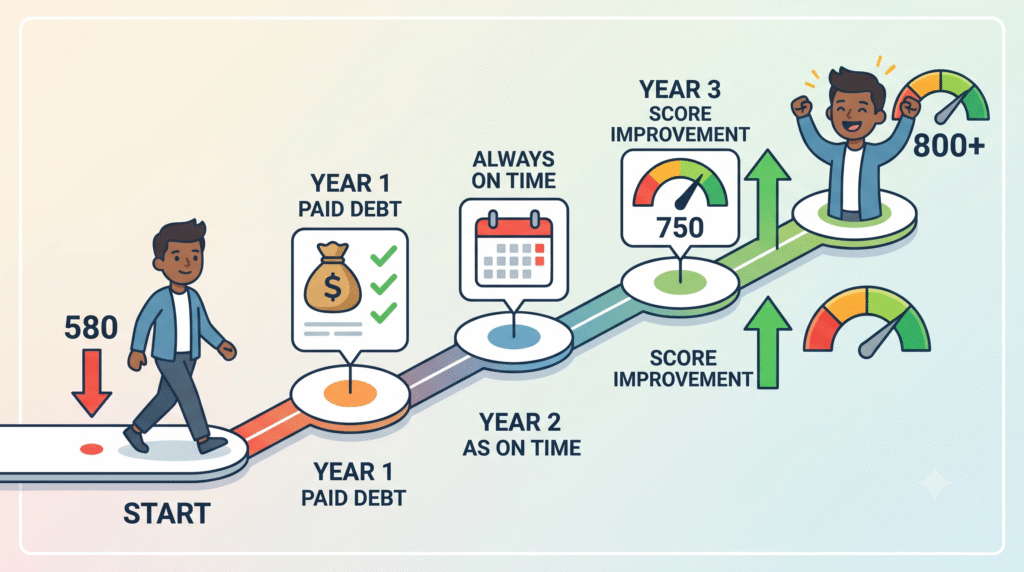
Building strong credit requires patience.
While small improvements may occur within a few months of consistent responsible behavior, establishing a lengthy positive credit history typically takes several years.
The key is consistency rather than attempting quick credit repair strategies.
How to Improve Your Credit Score
If your credit score needs improvement, these practical steps may help.
Pay Every Bill on Time
Payment history remains one of the strongest influences on your credit profile.
Reduce Outstanding Debt
Lower balances improve your credit utilization ratio.
Avoid Closing Old Accounts
Older accounts help strengthen your credit history.
Limit New Credit Applications
Apply for credit only when necessary.
Correct Credit Report Errors
Review your reports regularly and dispute inaccurate information promptly.
Credit Score vs Credit Report
Although closely related, these terms have different meanings.
| Credit Score | Credit Report |
|---|---|
| Numerical rating | Detailed financial record |
| Used by lenders | Source of scoring information |
| Changes over time | Contains account history |
| Indicates credit risk | Explains financial activity |
Understanding both helps you better manage your financial health.
Expert Tips for Maintaining Excellent Credit
After reviewing common lending practices and consumer credit behavior, one principle consistently stands out: long-term consistency matters far more than short-term strategies.
Instead of focusing on rapid score increases, develop habits that naturally strengthen your financial profile. Paying bills on time, maintaining low credit utilization, avoiding unnecessary borrowing, and reviewing your credit reports regularly are far more effective than searching for quick fixes.
It’s also important to recognize that life circumstances change. Buying a home, financing a vehicle, or opening a new credit card may temporarily influence your score. Understanding these fluctuations helps you make informed decisions without unnecessary concern.
For additional guidance on credit reports and consumer rights, visit the Consumer Financial Protection Bureau at https://www.consumerfinance.gov/ and learn more about credit scoring on Wikipedia at https://en.wikipedia.org/wiki/Credit_score. These trusted resources provide reliable educational information about how credit systems work and how consumers can protect their financial information.
Frequently Asked Questions (FAQ)
What is a credit score?
Short answer: A credit score is a number that represents your creditworthiness.
Lenders use it to help evaluate how likely you are to repay borrowed money responsibly.
What factors affect my credit score?
Short answer: Several financial behaviors.
Payment history, credit utilization, credit history length, credit mix, and new credit applications commonly influence your score.
Does checking my own credit score lower it?
Short answer: No.
Checking your own score is generally considered a soft inquiry and typically does not affect your credit score.
How can I improve my credit score?
Short answer: Build consistent financial habits.
Pay bills on time, reduce outstanding balances, avoid unnecessary credit applications, and monitor your credit reports regularly.
How long does negative information stay on my credit report?
Short answer: It depends.
Different types of negative information remain on credit reports for different lengths of time according to applicable laws and reporting standards.
Is a higher credit score always better?
Short answer: Generally, yes.
Higher scores often improve loan approval chances and may qualify borrowers for lower interest rates.
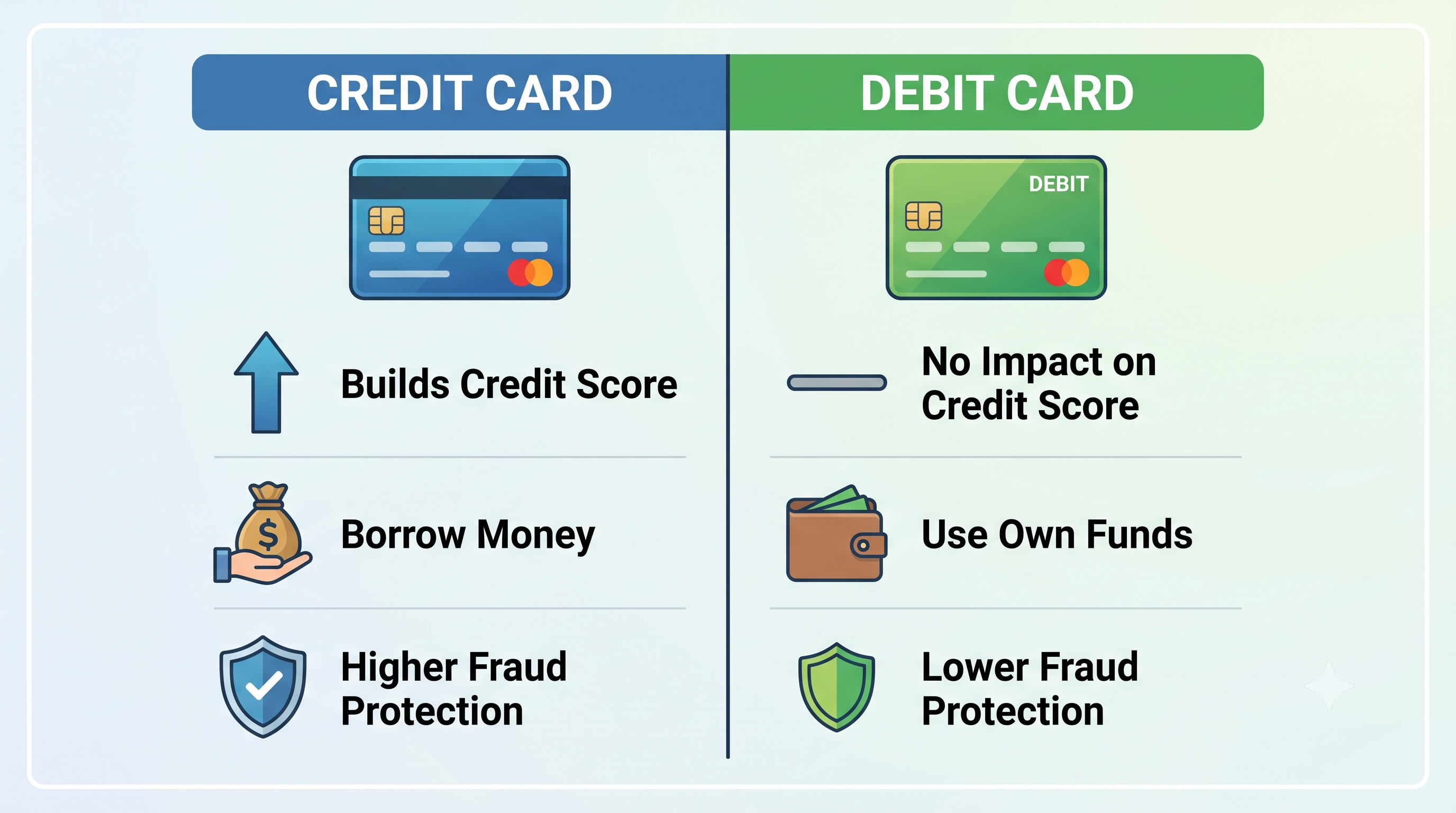
Can I build credit without carrying debt?
Short answer: Yes.
Using credit responsibly and paying balances in full each month can help build a positive credit history without paying interest.
Why should I review my credit report regularly?
Short answer: To ensure accuracy.
Regular reviews help detect reporting errors, identity theft, and unauthorized accounts before they become larger problems.
Final Thoughts
Understanding how credit scores work is one of the most valuable financial skills you can develop. Your credit score influences borrowing opportunities, financing costs, and overall financial flexibility, making it an essential part of long-term financial planning.
Rather than focusing on quick improvements, build strong habits that support lasting financial health. Paying on time, maintaining low credit utilization, reviewing your credit reports, and borrowing responsibly will help strengthen your credit profile over time and open the door to better financial opportunities.