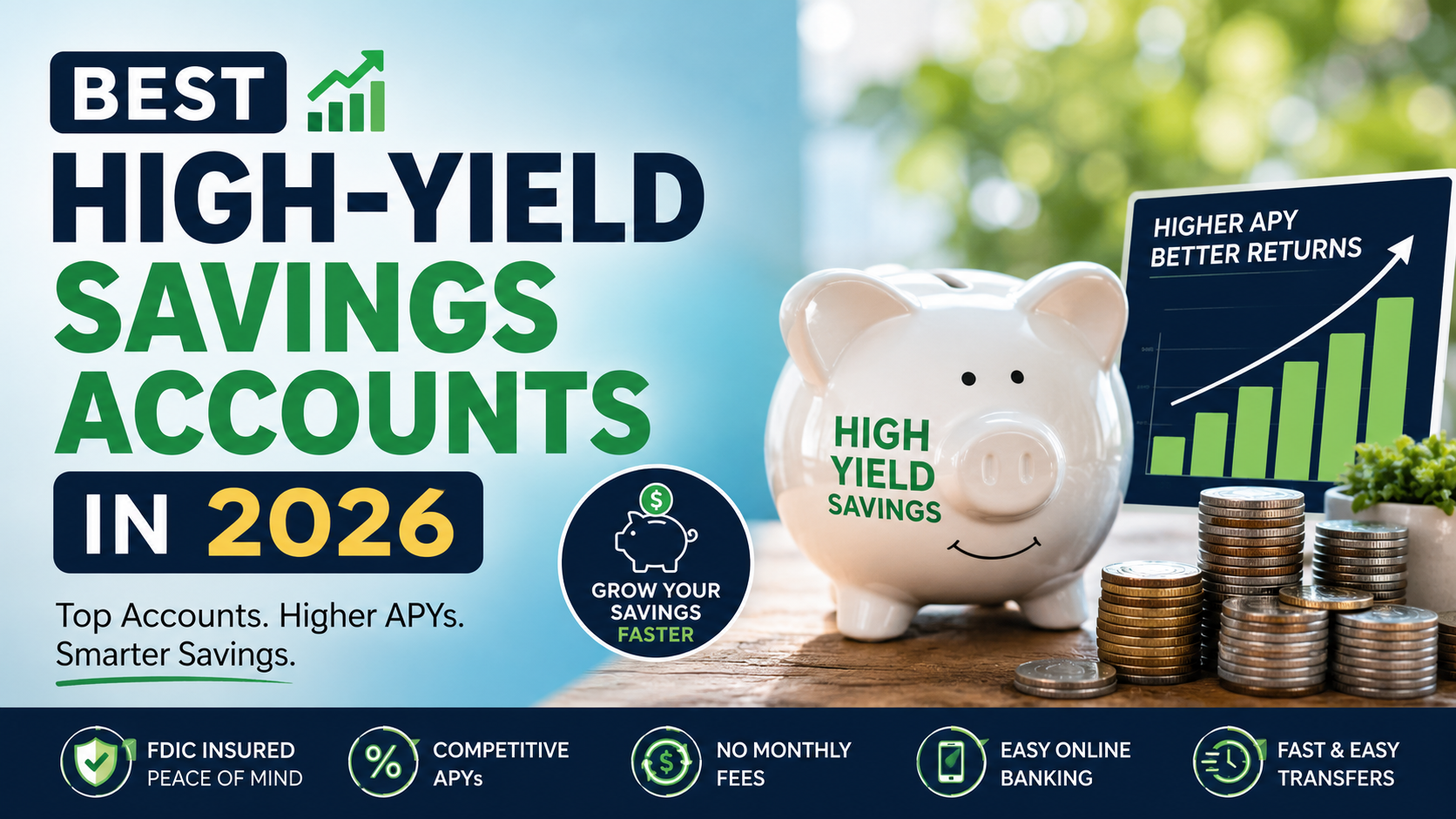
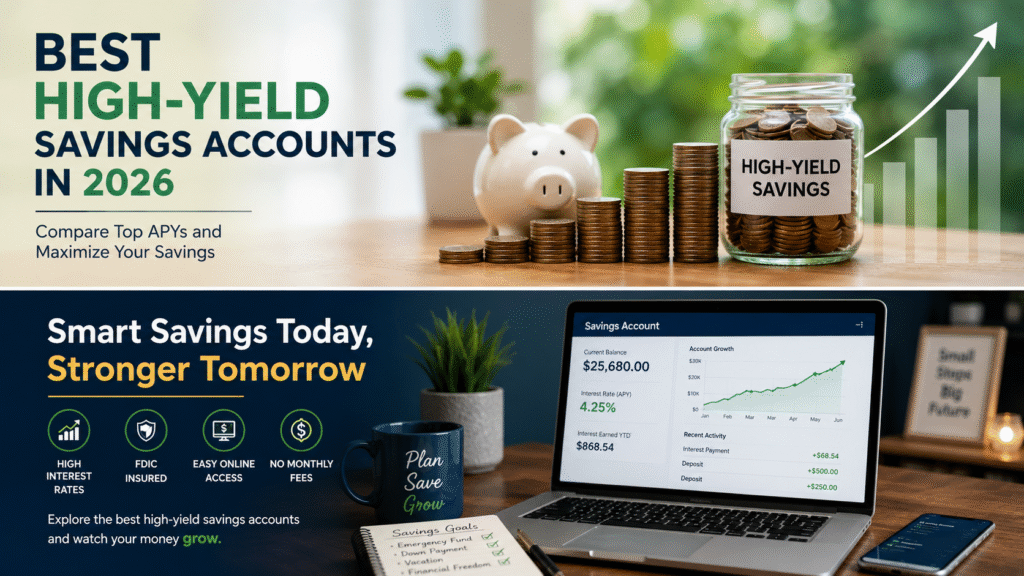
Saving money has become more rewarding than ever, thanks to the growing popularity of high-yield savings accounts (HYSAs). Unlike traditional savings accounts that often pay minimal interest, the best high-yield savings accounts in 2026 offer significantly higher annual percentage yields (APYs), allowing your money to grow faster while remaining easily accessible.
Whether you’re building an emergency fund, saving for a vacation, or setting aside money for a home purchase, choosing the right high-yield savings account can make a noticeable difference over time. However, APY isn’t the only factor that matters. Fees, withdrawal flexibility, minimum balance requirements, mobile banking features, and FDIC or NCUA insurance all play an important role in selecting the right account.
In this comprehensive guide, you’ll learn how high-yield savings accounts work, what features to compare, and how to choose the best option for your financial goals in 2026.
What Is a High-Yield Savings Account?
A high-yield savings account is a savings account that pays a much higher interest rate than a traditional savings account.
Most traditional banks still offer relatively low interest rates on savings, while online banks and digital financial institutions often provide significantly higher APYs because they operate with lower overhead costs.
The biggest advantage is simple: your money earns more interest without requiring additional investment risk.
For example, if you deposit $10,000 into a savings account earning a higher APY, you’ll generally earn considerably more interest over a year than you would in a standard savings account with a very low rate.
Why High-Yield Savings Accounts Are Popular in 2026
Several factors have contributed to the growing popularity of HYSAs in 2026:
- Higher interest rates than traditional savings accounts
- Easy online account opening
- No monthly maintenance fees at many institutions
- FDIC or NCUA insurance protection (within applicable limits)
- Mobile apps with budgeting and savings tools
- Fast transfers between checking and savings accounts
Consumers have become increasingly focused on earning more from idle cash while avoiding unnecessary investment risk. High-yield savings accounts provide an attractive balance between accessibility and returns.
Key Features to Compare Before Opening an Account
1. Annual Percentage Yield (APY)
APY is the most important number to compare because it reflects how much interest you’ll earn annually, including compound interest.
Even a small difference in APY can lead to meaningful additional earnings over several years.
However, remember that savings account interest rates are variable and may change depending on market conditions.
2. Monthly Fees
Many of the best accounts charge:
- No monthly maintenance fees
- No account opening fees
- No hidden service charges
Avoid accounts where fees could offset the interest you earn.
3. Minimum Deposit Requirements
Some banks allow you to open an account with no minimum deposit, while others require an initial balance.
Consider choosing an account that fits your current savings goals instead of forcing you to maintain a larger balance.
4. FDIC or NCUA Insurance
Safety should always come before returns.
Choose banks insured by the Federal Deposit Insurance Corporation (FDIC) or credit unions insured by the National Credit Union Administration (NCUA).
These protections generally cover eligible deposits up to applicable insurance limits if the institution fails.
5. Mobile Banking Experience
A quality mobile app should include:
- Mobile check deposits
- Instant transfers
- Account alerts
- Spending insights
- Biometric login
- Secure authentication
Convenience matters just as much as interest rates.
6. Withdrawal Flexibility
Although savings accounts are designed for saving rather than everyday spending, it’s still important to understand:
- Transfer limits
- Processing times
- External bank transfers
- ATM availability (if offered)
Knowing these details helps prevent unexpected delays.
Benefits of High-Yield Savings Accounts
Choosing one of the best high-yield savings accounts in 2026 offers several advantages.
Earn More Interest
Your savings grow faster than they would in a traditional account.
Lower Risk
Unlike stocks or cryptocurrencies, savings accounts do not fluctuate in value due to market volatility.
Easy Access to Cash
Your money remains available whenever needed without selling investments.
Ideal for Emergency Funds
Financial experts often recommend keeping several months’ worth of living expenses in an easily accessible savings account.
Automatic Savings
Many banks allow recurring transfers that help build savings consistently.
Who Should Open a High-Yield Savings Account?
A HYSA is an excellent option for:
- First-time savers
- Students
- Families building emergency funds
- Home buyers saving for a down payment
- Travelers saving for vacations
- Freelancers managing irregular income
- Retirees holding short-term cash
If your money will likely be needed within the next few months or years, a high-yield savings account is often a practical choice.
How to Choose the Best High-Yield Savings Account in 2026
Instead of selecting the account with the highest advertised APY alone, evaluate the overall banking experience.
Consider these questions:
Does the bank charge fees?
Low or no fees help maximize your earnings.
Is customer support reliable?
Responsive customer service becomes valuable if you encounter issues with transfers or account access.
Is the mobile app easy to use?
Read user reviews to evaluate mobile banking quality.
Are transfers fast?
Some institutions offer same-day or next-day transfers.
Does the APY remain competitive?
Banks periodically adjust rates. Look for institutions with a history of offering competitive savings rates.
Common Mistakes to Avoid
Many savers unintentionally reduce their earnings by making avoidable mistakes.
Chasing APY Alone
The highest advertised rate doesn’t always provide the best overall experience.
Poor customer support or high fees can outweigh a slightly higher APY.
Ignoring Fees
Maintenance fees can reduce your interest earnings over time.
Always read the account disclosures carefully.
Keeping Too Much Cash
While HYSAs are excellent for short-term savings, long-term financial goals may benefit from diversified investments depending on your risk tolerance and time horizon.
Forgetting Rate Changes
High-yield savings account rates are variable.
Review your account periodically to ensure it remains competitive.
Expert Tips to Maximize Your Savings
After comparing dozens of savings account features over the years, one trend remains consistent: disciplined saving matters more than constantly switching banks for slightly higher rates.
Here are several practical strategies:
- Automate monthly deposits.
- Keep your emergency fund separate from daily spending.
- Review rates every six to twelve months.
- Avoid unnecessary withdrawals.
- Take advantage of budgeting tools offered by your bank.
- Compare total account value rather than APY alone.
Small, consistent habits often outperform frequent account switching.
High-Yield Savings Accounts vs Traditional Savings Accounts
| Feature | High-Yield Savings Account | Traditional Savings Account |
|---|---|---|
| Interest Rate | Much higher | Usually lower |
| Monthly Fees | Often none | May apply |
| Online Banking | Excellent | Varies |
| Mobile Features | Advanced | Basic |
| Best For | Growing savings | Basic banking |
| Accessibility | High | High |
Are High-Yield Savings Accounts Safe?
Yes, provided you choose an insured financial institution.
Banks insured by the FDIC and credit unions insured by the NCUA protect eligible deposits within applicable limits, making HYSAs one of the safest places to store short-term savings.
It’s still wise to verify that your chosen institution is federally insured before opening an account.
Final Thoughts
The best high-yield savings accounts in 2026 offer an excellent combination of safety, competitive interest rates, and flexibility. While no single account is perfect for everyone, comparing APY, fees, customer service, insurance coverage, and digital banking features can help you find the right fit for your financial goals.
Remember that earning a high APY is only one piece of the equation. Consistent saving, avoiding unnecessary fees, and regularly reviewing your account are equally important for building wealth over time.
For additional information about how savings accounts work and the protections available to depositors, you can refer to the official FDIC Consumer Resources and the Wikipedia article on Savings Accounts, both of which provide reliable background information:
Frequently Asked Questions (FAQ)
What is a high-yield savings account?
Short answer: A savings account that offers a significantly higher interest rate than a traditional savings account.
These accounts help your money grow faster while keeping it accessible for future needs.
Are high-yield savings accounts safe?
Short answer: Yes, if the account is FDIC- or NCUA-insured.
Eligible deposits are protected up to the applicable insurance limits.
Can interest rates change?
Short answer: Yes.
Most high-yield savings accounts have variable interest rates that can increase or decrease based on market conditions.
Do high-yield savings accounts charge monthly fees?
Short answer: Many do not.
However, always review the fee schedule before opening an account.
How much money should I keep in a high-yield savings account?
Short answer: Enough to cover your short-term savings goals and emergency fund.
Many financial professionals recommend maintaining three to six months of essential living expenses, though the right amount depends on your personal circumstances.
Can I withdraw money anytime?
Short answer: Generally yes.
Most banks allow withdrawals and transfers, though some may have processing times or other account-specific conditions.
Is a high-yield savings account better than investing?
Short answer: It depends on your goals.
A HYSA is ideal for short-term savings and emergency funds, while long-term goals may benefit from investments that carry higher potential returns and higher risk.
How often should I compare savings accounts?
Short answer: At least once or twice a year.
Regular reviews help ensure your account remains competitive as interest rates change.