
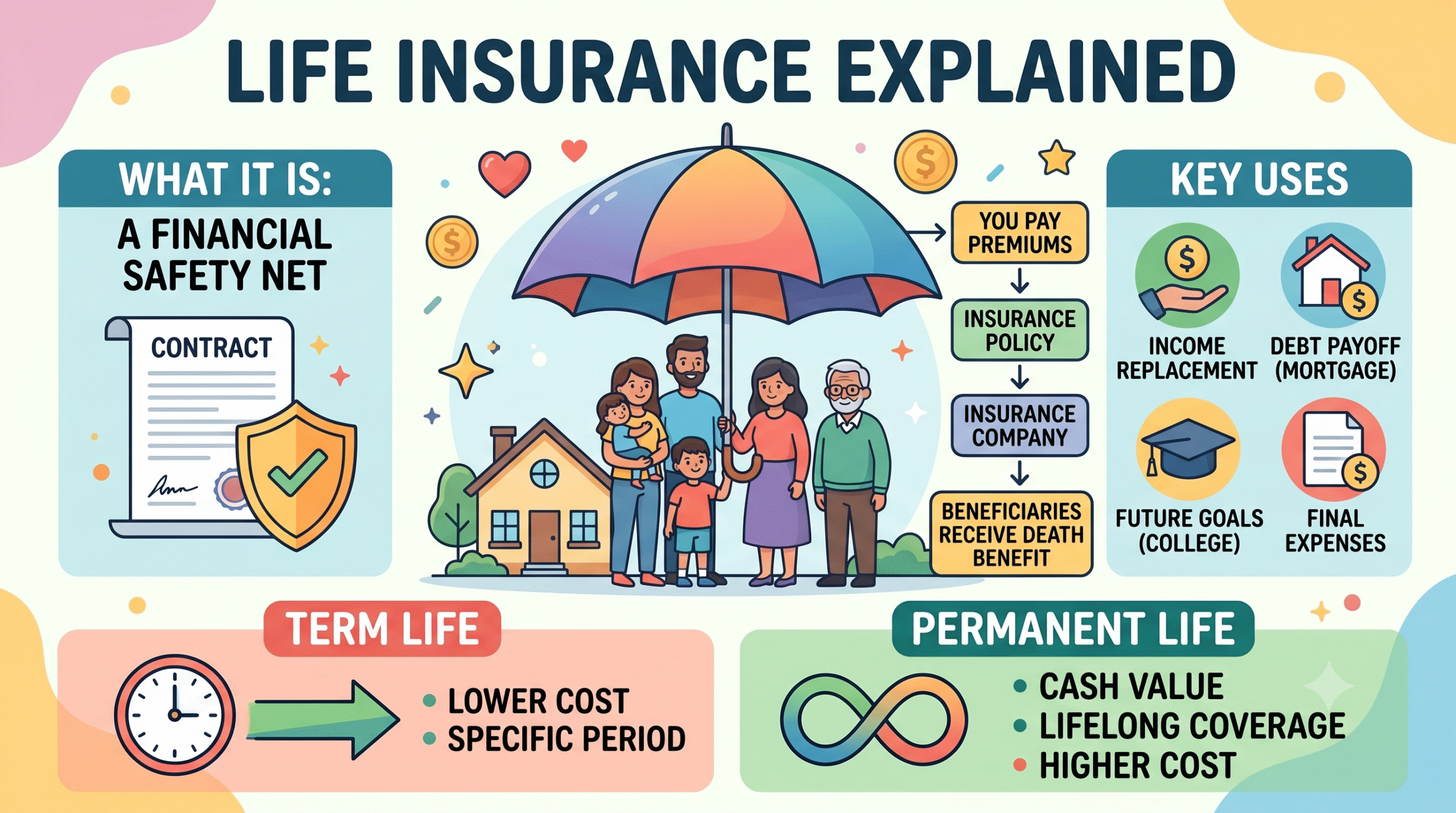
Life insurance is one of the most important financial tools available, yet it is also one of the most misunderstood. Many people believe life insurance is only necessary for older adults or families with young children. In reality, life insurance can play a vital role in protecting anyone whose income or financial support is important to others.
At its core, life insurance provides financial protection for your loved ones if you pass away during the policy period. The payout, known as the death benefit, can help beneficiaries cover daily living expenses, mortgage payments, education costs, outstanding debts, and even funeral expenses. For many families, this financial safety net can make the difference between stability and hardship during an already difficult time.
Choosing a life insurance policy isn’t simply about finding the cheapest premium. It requires understanding how different policies work, how much coverage you need, and which features align with your long-term financial goals. This guide explains life insurance in simple terms while providing practical insights to help you make an informed decision.
What Is Life Insurance?
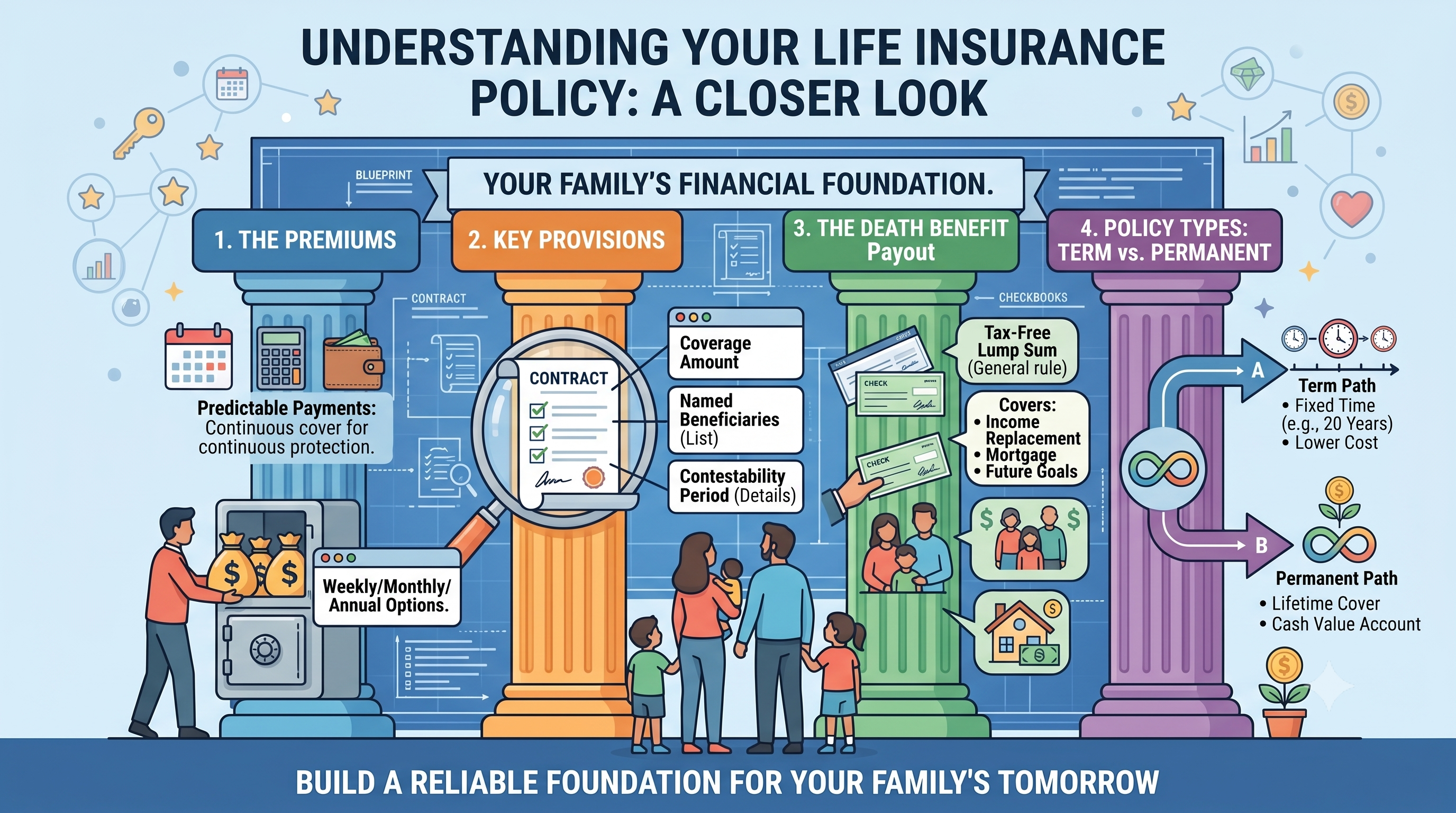
Life insurance is a legal contract between you and an insurance company. In exchange for regular premium payments, the insurer agrees to pay a predetermined amount of money to your chosen beneficiaries if you die while the policy is active.
This payment is generally tax-free in many jurisdictions, although tax rules vary by country and individual circumstances.
The primary purpose of life insurance is to replace lost income and reduce the financial burden on your family after your death.
How Does Life Insurance Work?
Understanding how life insurance works makes choosing a policy much easier.
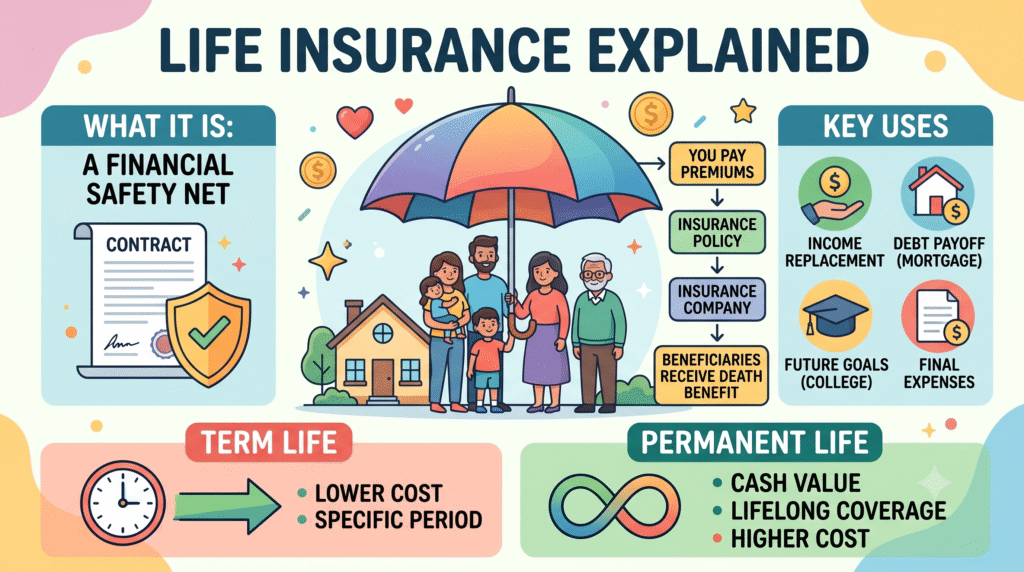
The basic process includes four simple steps:
1. Purchase a Policy
You select a policy type and coverage amount based on your financial responsibilities.
2. Pay Premiums
Premiums may be paid monthly, quarterly, or annually.
3. Keep the Policy Active
As long as premiums are paid according to the policy terms, the coverage remains in force.
4. Death Benefit Is Paid
If the insured person dies while covered, the insurance company pays the death benefit to the designated beneficiaries after reviewing the claim.
Why Is Life Insurance Important?
Life insurance protects the people who depend on your income.
Without adequate coverage, surviving family members may struggle with:
- Mortgage payments
- Household bills
- Children’s education
- Medical expenses
- Outstanding loans
- Funeral costs
- Daily living expenses
Life insurance helps reduce financial uncertainty during one of life’s most difficult moments.
Types of Life Insurance
Not all life insurance policies are the same. Each serves different financial needs.
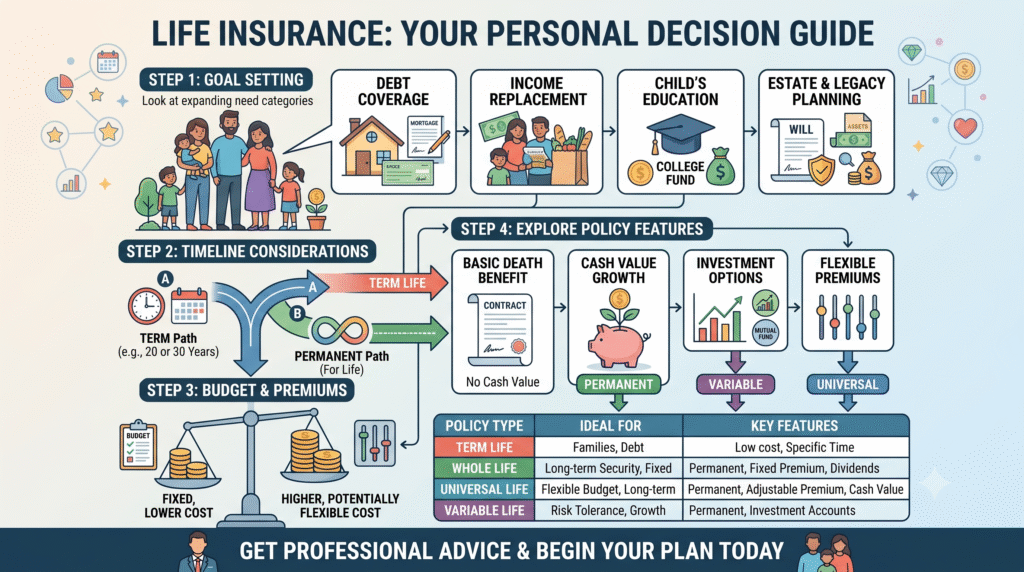
Term Life Insurance
Term life insurance provides coverage for a specific period, such as 10, 20, or 30 years.
Advantages
- Lower premiums
- Simple structure
- High coverage amounts
- Ideal for young families
Disadvantages
- Coverage expires after the policy term
- No cash value accumulation
Term insurance is often the most affordable option for people seeking income protection.
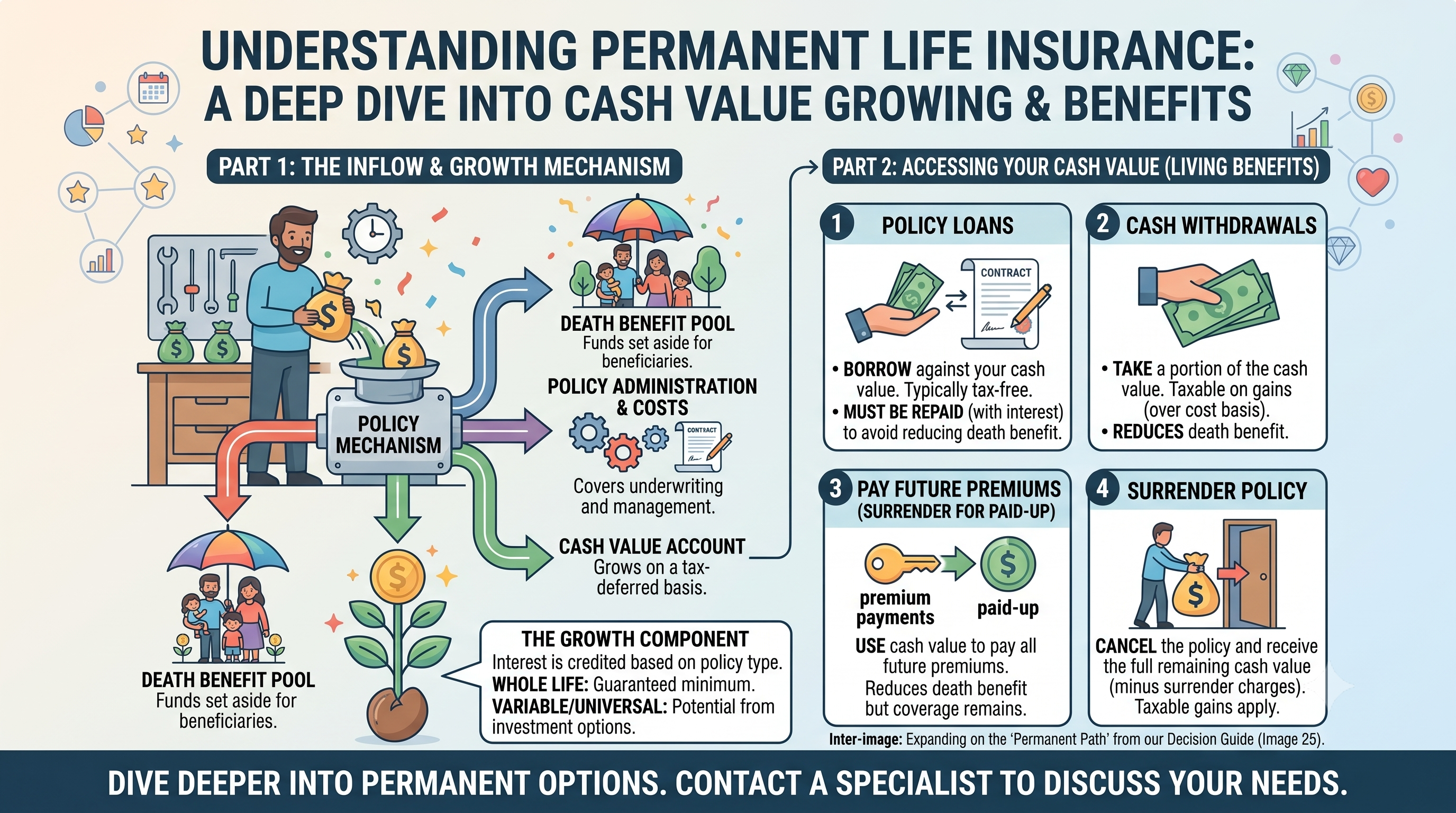
Whole Life Insurance
Whole life insurance provides lifetime coverage as long as premiums are paid.
In addition to the death benefit, these policies build cash value over time.
Advantages
- Lifetime protection
- Guaranteed cash value growth
- Fixed premiums
Disadvantages
- Higher premiums
- More complex than term insurance
Whole life insurance may suit individuals seeking both protection and long-term financial planning.
Universal Life Insurance
Universal life insurance combines permanent coverage with flexible premium payments and adjustable death benefits.
The policy also accumulates cash value based on interest earnings.
Because these policies involve more variables, they require regular review to ensure they continue meeting financial goals.
Variable Life Insurance
Variable life insurance allows policyholders to invest part of the cash value into investment options such as mutual fund-like portfolios.
Potential returns are higher, but investment performance also introduces greater risk.
This type of insurance is generally better suited to experienced investors who understand market fluctuations.
Who Needs Life Insurance?
Life insurance isn’t necessary for everyone, but it becomes especially important if others rely on your income.
People who commonly benefit include:
Parents
Protect children’s future education and living expenses.
Married Couples
Help a surviving spouse maintain financial stability.
Homeowners
Provide funds to help pay off a mortgage.
Business Owners
Support business continuity and protect partners or employees.
Individuals with Debt
Prevent family members from struggling with outstanding financial obligations.
How Much Life Insurance Do You Need?
There is no universal answer because every family’s financial situation differs.
When calculating coverage, consider:
- Annual household income
- Outstanding mortgage balance
- Personal loans
- Credit card debt
- Children’s education costs
- Emergency savings
- Existing investments
- Retirement funds
Many financial professionals recommend coverage that equals approximately 10 to 15 times your annual income, although individual needs vary significantly.
Factors That Affect Life Insurance Premiums
Insurance companies evaluate several factors before determining premium costs.
Age
Younger applicants usually receive lower premiums because they present lower risk.
Health
Medical conditions may increase premiums or affect eligibility.
Lifestyle
Smoking, excessive alcohol consumption, and dangerous hobbies often increase costs.
Occupation
High-risk professions generally pay higher premiums.
Coverage Amount
Larger death benefits require higher premium payments.
Policy Type
Permanent insurance typically costs more than term insurance.
Benefits of Life Insurance
Life insurance offers more than just a death benefit.
Income Replacement
Ensures dependents can maintain their standard of living.
Debt Protection
Helps repay mortgages, loans, and other financial obligations.
Education Funding
Supports children’s future education costs.
Funeral Expense Coverage
Reduces financial stress during an emotional time.
Peace of Mind
Knowing your family has financial protection provides confidence and long-term security.
Common Life Insurance Myths
Many misconceptions prevent people from purchasing adequate coverage.
Myth 1: Life Insurance Is Only for Older People
Reality: Younger individuals generally qualify for much lower premiums.
Myth 2: Employer Coverage Is Enough
Reality: Employer-sponsored coverage is often limited and usually ends if you leave your job.
Myth 3: Stay-at-Home Parents Don’t Need Insurance
Reality: Replacing childcare and household responsibilities can be extremely expensive.
Myth 4: Life Insurance Is Too Expensive
Reality: Many healthy adults can obtain affordable term life insurance.
Tips for Choosing the Right Policy
Selecting the right policy requires careful comparison.
Compare Multiple Insurers
Don’t purchase the first policy you see.
Understand Policy Exclusions
Read the contract carefully to understand what is and isn’t covered.
Review Financial Strength
Choose insurers with strong financial ratings and a proven claims-paying history.
Review Your Coverage Regularly
Life events such as marriage, having children, or buying a home may require increasing your coverage.
Common Mistakes to Avoid
Buying Too Little Coverage
Underestimating future expenses leaves your family financially vulnerable.
Choosing Based Only on Price
The cheapest policy isn’t always the best value.
Forgetting Beneficiary Updates
Marriage, divorce, or the birth of children may require updating beneficiaries.
Waiting Too Long
Premiums generally increase with age and changing health conditions.
Life Insurance vs Health Insurance
These two insurance products serve entirely different purposes.
| Life Insurance | Health Insurance |
|---|---|
| Pays beneficiaries after death | Covers medical expenses while you’re alive |
| Protects family finances | Protects healthcare costs |
| Focuses on income replacement | Focuses on treatment costs |
| Death benefit | Medical reimbursement |
Understanding this distinction helps avoid confusion when building a complete financial protection plan.
Is Life Insurance Worth It?
For many families, the answer is yes.
Life insurance provides financial stability during one of life’s most challenging events. It allows surviving family members to focus on healing rather than worrying about immediate financial obligations.
While no insurance policy can replace a loved one, it can reduce financial stress and preserve long-term financial security.
Expert Advice
One of the most common mistakes people make is delaying the purchase of life insurance until they believe they “need it.” In practice, obtaining coverage earlier often results in significantly lower premiums because insurers generally view younger, healthier applicants as lower risk.
It’s also wise to reassess your policy after major life events, such as marriage, the birth of a child, purchasing a home, or starting a business. Your insurance coverage should evolve alongside your financial responsibilities.
Before purchasing any policy, compare coverage features, exclusions, claim settlement history, customer service, and the insurer’s financial strength—not just the monthly premium.
For additional guidance on life insurance and financial planning, visit the official Consumer Financial Protection Bureau (https://www.consumerfinance.gov/) for consumer education, or learn more about life insurance concepts on Wikipedia (https://en.wikipedia.org/wiki/Life_insurance). These resources provide reliable background information and can help you make informed decisions.
What is life insurance?
Short answer: Life insurance provides financial support to your beneficiaries after your death.
It helps protect your family by paying a death benefit if you pass away while your policy is active.
Who should buy life insurance?
Short answer: Anyone with financial dependents or outstanding obligations.
Parents, homeowners, business owners, and individuals supporting family members often benefit from life insurance.
What is the difference between term and whole life insurance?
Short answer: Term covers a fixed period, while whole life provides lifelong coverage.
Whole life insurance also builds cash value over time, whereas term life does not.
How much life insurance coverage do I need?
Short answer: It depends on your financial responsibilities.
Consider your income, debts, mortgage, education expenses, and long-term family needs when calculating coverage.
Can I have more than one life insurance policy?
Short answer: Yes.
Many people own multiple policies to meet different financial goals, provided the total coverage is justified during underwriting.
Does life insurance cover natural death?
Short answer: Yes, in most cases.
Most policies cover natural causes of death, provided the policy terms have been met and there are no applicable exclusions.
Final Thoughts
Understanding life insurance explained is the first step toward protecting the people who matter most. Whether you choose a term policy for affordable income protection or a permanent policy with lifelong benefits, the right coverage can provide lasting financial security and peace of mind.
Before making a decision, assess your family’s current and future financial needs, compare insurers carefully, and review your policy regularly as your life changes. Life insurance is not just another financial product—it’s a long-term commitment to safeguarding your loved ones’ future.